The Avengers: The Grandeur That Was Rome

The Grandeur That Was Rome (Episode 03-10, November 1963).

grandeur that was rome

The Avengers typically conjures up some impressive plots: diabolical masterminds with delusions of grandeur abound, some of them with a pretty good idea and a desire to rule the world. The Grandeur That Was Rome and its villain Sir Bruno Luca (Hugh Burden) should be among the finest examples of early insanity in a show that would eventually feature man-eating plants from the Moon. It’s unfortunate, therefore, that a good idea turns out to be so poorly done.

The basic plot is this: Sir Bruno, a feed manufacturer with an obsessive love for Ancient Rome, decides that he’s going to take over the world and turn it into a new Roman Empire, with himself as Caesar. To accomplish this, he enlists the help of Marcus (John Flint) to drum up trouble abroad when the grain he manufactures begins killing off livestock and tainting crops. But Bruno’s plans run even deeper and more diabolical than that, as Steed and Cathy step into the picture to stop the madman and save the world.

This has all the hallmarks of a really great episode: an obsessive madman, a credible and deadly plot, and plenty of togas. How, then, does it manage to fall so precariously short? For starters, the episode spends far too much time on the sneering villains and far too little time with our intrepid heroes. While Hugh Burden’s Sir Bruno is an excellent bad guy, it eventually becomes difficult to stomach his obvious delusions. His right-hand man Marcus and consort Octavia (Colette Wilde) are even less interesting, posturing to a degree that is boring rather than chilling.

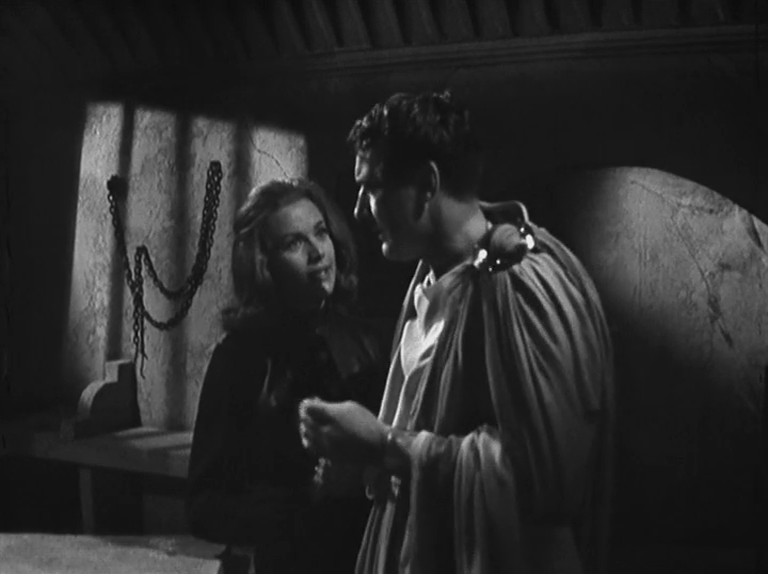
When Steed and Cathy do put in an appearance, things begin to pick up. While we have precious little of Cathy’s judo to enjoy, there are some charming scenes of repartee between the pair. One might have hoped for some even greater excitement with the final act Bacchanalia at Sir Bruno’s house, but (as with the later Emma Peel episode A Touch of Brimstone) the censorship requirements of 1960s television put a damper on things. There is the joy of seeing Steed in a toga – not to mention Cathy’s reaction – but unfortunately that does not make for more than a few seconds of justifiable fun.

The Grandeur That Was Rome is an episode that I earnestly wish had been remade later in the series, when money and a better crew of writers might have been able to turn it into something truly weird and delightful. As it is, there are only a few scenes to really justify its existence.

The Avengers: The White Elephant

The White Elephant (03-15, January 1964).

the-white-elephant-steed-gale

Steed and Cathy grapple with ivory smugglers and big game hunters in The White Elephant, making it the only episode that utilizes Cathy’s past as a big game hunter in Africa as an important plot element. It’s unfortunate that The White Elephant fails to gain momentum, because it has all the hallmarks of a good episode.

The trouble all begins with the disappearance of a white elephant named Snowy from “Noah’s Ark,” a clearing-ground for imported animals run by Noah Marshall (Godfrey Quigley). The animals are captured by Noah’s team of hunters, and then run through the Ark on their way to zoos and “private collectors” across Britain and Europe. But Steed suspects that Noah’s Ark is also a front for smuggled ivory from illegally slaughtered elephants. Cathy joins up as a new hunter while Steed starts tracing possible co-conspirators, leading him to a gun merchant’s and, more amusingly, a ironworks specializing in cages and restraints.

The White Elephant goes through a lot of bending and twisting to make everything work out, once more introducing the “young lovers” motif that makes so many episodes from the video seasons so very boring. These lovers are not terribly sympathetic: secretary Brenda (Judy Parfitt) and hunter Lew Conniston (Scott Forbes) are among the least likable of the bunch. Their nasty little problems drag down some scenes that might otherwise pop, and unfortunately they take up more than their allotted space. The time spent with secondary characters takes away from the main plot, but it also continues to highlight the somewhat questionable activities of…pretty much everyone. While the importation of captured animals must have been more common in 1964, it leaves a bad taste in 2015 – especially as we watch a final fight waged around animals who look somewhat terrified by the whole ordeal.

Still, there are certainly high points in The White Elephant. We have Cathy telling one baddie that he “surely does not need a gun to kill a woman” (answer: yeah, he does), while Steed has a marvelous time purchasing restraints. Our two heroes seem to be enjoying each other’s company for the majority of the episode, playing chess and looking over Steed’s bondage purchases with open interest. If the rest of the plot was as interesting as their relationship, The White Elephant would be one of the best of the season. As it is, it’s not quite a bad episode, but is also nothing to write home about.

The Avengers: The Gilded Cage

The Gilded Cage (Episode 03-07, November 1963).

gilded-cage

As The Avengers moved into its third season, the series hit a stride that produced some of its all-around best episodes. Still tied down by the necessities of live videotaping, the writers and directors tried to expand their repertoire to involve more locations and more complex plots. Among the best of Season 3 is The Gilded Cage, an episode that eerily foreshadows Honor Blackman’s later foray into the gold trade.

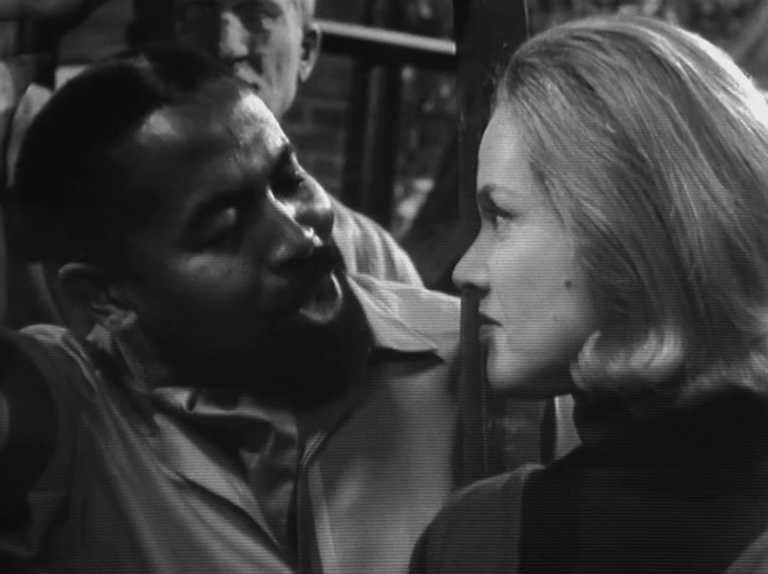
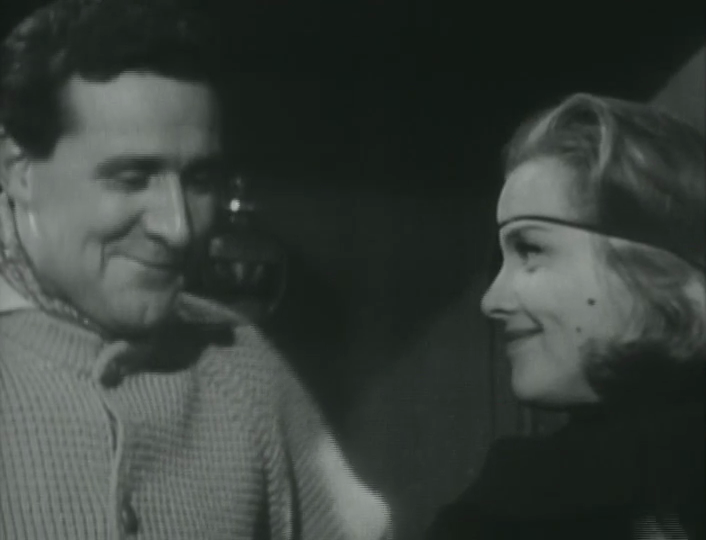
The Gilded Cage has Cathy posing as a gold bullion expert employed at a secret vault that stores millions of pounds worth of gold bars. She and Steed attempt to draw millionaire criminal  J.P. Spagge (Patrick Magee) out of retirement using a brilliantly planned robbery (conceived by Cathy) as bait. Things do not  go as planned, resulting in Cathy’s arrest for Spagge’s murder. All is not as it seems, however, and Cathy soon finds herself in the company of some nefarious (but charming) criminals, led by Abe Benham (Edric Connor), while Steed tries to figure out just what the hell is going on.

The Gilded Cage has two things going for it: excellent plotting with numerous but explicable twists and turns, and a very strong supporting cast. Edric Connor’s performance as Abe Benham is notable – he’s a charming crook, likable and good-humored, with an undercurrent of ruthlessness that perfectly matches Cathy’s. He’s also one of the only black actors to have a major role in an Avengers episode, happily giving the lie to Brian Clemens’s unfortunate pronouncement that there are no black people in that world. Abe and Cathy have a powerful, amusing chemistry together that makes one almost wonder if Cathy wouldn’t like to chuck in the whole “law and order” thing and have a go at being a criminal mastermind.

The plot of this episode demands a number of location changes and some pretty complicated blocking, most of which comes off without a hitch. The greatest failure in the episode is that lack of Steed and Cathy banter – they’re separated within the first fifteen minutes, and remain separated right until the end. But both get to have their fun: Cathy with Abe and the boys, and Steed as a rather inept crook nonetheless admired by Spagge’s butler Fleming (Norman Campbell). Listen carefully as Fleming delineates Steed’s wardrobe, where he got it, and how much he paid for it: it’s a beautiful litany of male sartorial appreciation.

The Gilded Cage is a high point of Season 3, right up there with The WringerThe Nutshell, and Don’t Look Behind You. The Avengers would be cleaner in the future, but you can’t get much better than this.

All Night Long (1962)

All Night Long (1962)

all-night-long-poster

Shakespeare has been retold, re-adapted, modernized; he has been edited for length and subject, retold to fit high school love triangles, Miami street gangs, and even animated lions. Ubiquitous as Shakespeare is, it should come as no surprise that someone along the line decided to retell Othello as a (then) modern tale of love and race among drunk and disorderly jazz musicians in 1960s London.

Basil Dearden’s All Night Long takes the plot of Othello and adds some needed jazz scoring. Aurelius Rex (Paul Harris) is the leader of a major jazz ensemble that includes his passionate sax player Cass (Keith Mitchell) and brilliant drummer Johnny Cousins (Patrick McGoohan). Rex is married to Delia (Marti Stevens), a beautiful blonde chanteuse who quit her night job to be his wife. On the eve of their one-year wedding anniversary, music promoter Rod Hamilton (Richard Attenborough) throws the happy couple a big party, complete with fellow jazz musicians Dave Brubeck, Johnny Dankworth, and Keith Christie to keep the music and spirits flowing. Things are not well in paradise, however: Johnny Cousins wants a band of his own, with Delia at the head. To this end, he employs any nefarious means necessary to get Delia away from Rex and back in the spotlight.

all-night-long-mcgoohan

There are two real stars in All Night Long, and the first is the music. The likes of Brubeck and Dankworth lend some serious musical talent to the proceedings, punctuating the backstage manipulations, petty jealousies, and passionate love affairs with piano solos and drum kicks. The non-musical lead actors do a credible job of miming their instruments, but give wide range to the real jazz performers to do what they do best. Even if the film was unsuccessful in other ways, the sheer virtuosity of the jazz would be enough to make me watch it all again.

The other star is Patrick McGoohan. His Johnny Cousins is the perfect Iago: a blend of malevolence and desperation, a pathetic sociopath incapable of loving anyone, including himself. Johnny makes his entrance with a slew of drum cases bearing his name, bruiting both his self-involvement and his desperation to be recognized as someone important. His manipulation of Delia, Rex, and just about everyone else at the party starts out as calculated and self-serving, but it soon becomes apparent that, like Iago, Johnny does what he does out of pure spite. McGoohan has never been one of my favorite actors, but his intensity is perfect for the part. (As, indeed, are his formidable drumming skills. It’s difficult to mime drumming chops, and as far as I could tell McGoohan was doing his own work).

One of the more interesting elements of All Night Long is the racial aspect – or rather, the lack thereof. Despite the setting of London in the early 1960s, the marriage of Rex and Delia does not seem to raise any eyebrows. Other musicians are critical of Rex for making his wife quit working (though he constantly reiterates that she made the choice herself), but no one remarks on the social difficulties of a marriage between a black man and a white woman. Johnny’s malevolence has no hint of racial motivation, as it does to some degree in Othello – gone are Iago’s racial epithets, replaced by Johnny’s painful inability to love. We should note that Dearden was also the man behind films like Sapphire (about a racially motivated murder in 1960s London) and Victim, both unflinching in their examination of British intolerance. Yet in All Night Long, there is much being said in no one saying anything.

All Night Long has its failings, however. The trope of marijuana causing people to behave violently and erratically was a recognizable one in the 1960s, but is pretty laughable in 2015. The jazz lingo employed by our (predominantly British) musicians falls harshly on contemporary ears, making some lines impossible to listen to without cracking a smile. Finally, there is the confusion of British actors playing Americans, with McGoohan especially having difficulty maintaining a clear-cut accent. While far from a deal-breaker, some elements of All Night Long have dated rather badly, making the film more a product of its period than a universal classic.

Basil Dearden is one of finest and least recognized directors coming out of Britain in the 1960s. Here he makes excellent use of an excellent cast, highlighting some of his favorite social issues without shining a spotlight too fully on them. Patrick McGoohan in particular gives a fascinating performance, as Johnny’s cruelty runs hand in hand with his pathetic psychology. Othello was never as swinging as this.

With Umbrella, Scotch and Cigarettes (Book Review)

With Umbrella, Scotch and Cigarettes – An Unauthorised Guide To The Avengers Series 1

with-umbrella-avengers-paperback-cover-front

Following their excellent The Strange Case of the Missing Episodes, writers Richard McGinlay and Alan Hayes have gone even deeper into Avengers esoterica in With Umbrella, Scotch and Cigarettes – An Unauthorised Guide to The Avengers Series 1. The book focuses on the production history of the lost season, detailing everything from how The Avengers began right through to Ian Hendry’s departure in the aftermath of an actors’ strike and the ascension of Patrick Macnee to the lead role. Drawing on information from scripts, other histories of The Avengers, star biographies, and production notes, the authors paint the most comprehensive picture yet of the lost season.

McGinlay and Hayes open their book with a detailed depiction of the inception of The Avengers, initially conceived as a showcase for star Ian Hendry after the folding of his short-lived drama Police Surgeon. The addition of Patrick Macnee as “undercover man” John Steed, Ingrid Hafner as Dr. Keel’s nurse and assistant Carol, and a slew of producers, directors, and writers would make The Avengers what it eventually became: a combination of British noir, spy show, and genre-defying pastiche. From the rather harried early days of the show (that included Macnee being told that his character, already undeveloped in scripts, was not developed enough), The Avengers quickly became a sort of British noir, permeated with underworld characters and almost-anti-heroes.

Following their in-depth discussion of the show’s birth, McGinlay and Hayes cover each episode in turn. They divide their discussion into smaller sections covering existing archive materials, a general plot synopsis, production, location, star/writer/director biographies, miscellanea, contemporary press/media coverage, and finally a “verdict” on the episode itself. The division works well to present the complexities of production in a fairly readable manner, allowing writers and readers to delve into the various issues and occasional anecdotes that permeated the show. Some of the episodes have a fascinating production history and the book does an admirable job of charting the ebbs and flows of characters and plots, with new emphasis on the parts that various writers and directors played in creating the show.

With Umbrella, Scotch and Cigarettes is quite readable, an impressive feat for a book concerned with the missing episodes of a niche TV show. The production histories are fascinating, as are the individual bits of information about different episodes. Some episodes are more comprehensively covered than others, largely due to the availability of material, but every one is treated with interest and respect. Although I rarely enjoy looking into extensive production circumstances, I found the behind-the-scenes look into this series more interesting with each word.

umbrella-scotch-cigarettes-art

There are problems, however, mostly to do with the more critical and analytic aspects of the book. The authors have an unfortunate tendency to editorialize in the “verdict” sections of their episode overviews, providing small reviews of the episodes based upon available sources. The verdicts appear out of keeping with the otherwise scholarly and historically-minded book; what is more, they are assessments of episodes which the reader cannot hope to question or refute, as the only material presented in the book is of general plot synopses and production history (script excerpts are confined to the other McGinlay/Hayes book The Strange Case of the Missing Episodes). The reviews come off as an attempt to pass judgment on character actions in a series that no one has actually seen, with the reader in particular left faced with the authoritative statements of the authors over against no other ability to fully assess the episodes for themselves. It would have been more efficacious to provide a deeper critical analysis of episodes, based on extant information, rather than the limited reviews here. Having read The Strange Case of the Missing Episodes and watched the available materials, I am neither as enamored with Keel’s character as McGinlay and Hayes – in fact, I think they give the character far too much credit, and rather short shrift to the complexities of John Steed – nor do I share some of their assessments of the episodes or the characters. This is a critical disagreement only, but McGinlay and Hayes fail to support their reviews or assessments with in-depth analysis.

At times, it appears that the authors cannot decide whether they are writing a popular work or a serious scholarly investigation into the series – the effect is that some elements of the series appear to be elided over, while others (like the biographies of directors, writers, and actors) delved into with greater depth. At the same time, Hayes and McGinlay occasionally employ coy language in discussing the sexuality or violence present in The Avengers. I was particularly bothered by the use of phrases like “unable to come to terms with losing the woman he loved,” just prior to describing a director’s almost murderous attack on his former girlfriend, a director of programmes – an occurrence that caused a production delay on one episode. This sort of editorializing seemed an out of place and somewhat saccharine treatment of the story. That the authors are otherwise rather coy about their discussion of Steed’s “philandering” and relationships with women, as well as the darker sexual and violent aspects of the series, seems to bespeak an editorial inconsistency that sometimes mars episode discussions.

As with The Strange Case of the Missing Episodes, we see no photographs or images (save for a few lovely drawings of our heroes by artist Shaqui Le Vesconte), which again makes some of the episodes and productions difficult to visualize. The unwillingness of the authors to provide more comprehensive plot synopses makes it equally difficult to fully assess the episodes as fictional productions. Granted that those synopses are in the earlier book, it would behoove the reader to have both books on hand. I would encourage the reader to purchase both With Umbrella, Scotch and Cigarettes and The Strange Case of the Missing Episodes, and read them in tandem with each other to get a more complete picture of the season.

Finally, there is the matter of the appendices. Hayes and McGinlay have thought it fit to include an examination of several unproduced scripts for The Avengers, as well as discussions of “later” adventures of Steed and Keel, including comic strips that appeared in the 1960s and a later novel from the 90s. While the unproduced stories are fascinating, I cannot quite get behind the inclusion of a rather in-depth discussion of Too Many Targets, the novel by John Peel and Dave Rogers. Not only does it have little to do with a “guide to Series 1,” it really should be forgotten by the annals of time as a rather paltry form of fan fiction (of which there is also a plethora available on the Internet). If an appendix was absolutely necessary for this book, the authors might have been better served by covering the adaptations of the existing scripts in the Big Finish productions, if just a general overview of that resurrection attempt.

My objections to this book, however, are vastly outweighed by the positives. To my knowledge there has not been a more in-depth discussion of the first season of The Avengers, and certainly not one as accessible and interesting. Once more, McGinlay and Hayes paint a comprehensive picture of this season, giving us invaluable insight into the harried early years of a show that would eventually influence everything from James Bond to Marvel comics. As with The Strange Case of the Missing Episodes, I found myself longing for the original productions, to see Steed and Keel rushing through London, tackling underworld characters, drinking gallons of Scotch, and grappling with all the excitement and danger that live television could offer. As it is, we can only imagine what it all looked like – but With Umbrella, Scotch and Cigarettes goes a long way to fueling that imagination.

Both The Strange Case of the Missing Episodes and With Umbrella, Scotch and Cigarettes can be purchased via the following links:

Lulu: The Strange Case of the Missing Episodes, With Umbrella, Scotch and Cigarettes
Hidden Tiger: The Strange Case of the Missing Episodes, With Umbrella, Scotch and Cigarettes

Amazon: The Strange Case of the Missing EpisodesWith Umbrella, Scotch and Cigarettes

The Avengers: The Medicine Men

The Medicine Men (Episode 03-09, November 1963)

the-medicine-men-1

There are very few bad episodes of The Avengers (at least leading up to the sixth season), but there are quite a few that simply don’t impress. Some, like The Secrets Broker, fail to add up to something cohesive. Others are difficult to nail down, as their parts and plots all add up, their characters are interesting, but the episode itself comes off as lackluster. The Medicine Men is one such episode.

Steed and Cathy are back in the business side of things as they investigate the production of counterfeit medicines that have been flooding the market. When a young woman doing some investigation is murdered in a Turkish bath, that’s when The Avengers get involved. Cathy goes to the baths and Steed goes to Willis-Sopwith Pharmaceuticals, one of the companies hit the hardest by the counterfeit drug trade. They soon uncover a pretty diabolical conspiracy afoot, as Cathy’s investigations lead her to an artist (the delightfully creepy Harold Innocent) involved in the counterfeiting and Steed begins to suspect that someone within Willis-Sopwith is responsible for murder.

The Medicine Men has some excellent moments: Steed pretends to be an art dealer from Reykjavik, while Cathy gets smacked in the eye and spends the rest of the episode in an eyepatch. Their scenes together are as entertaining as they come as they trade barbs and golfing tips. Yet The Medicine Men fails to ever properly get going, rather moving from one scene to the next without much energy or panache. Here I think the plot itself is the culprit: like other business-themed episodes, the story gets bogged down in counterfeiting discussions, leaving the rest of the plot floundering. It took me awhile to begin to care about the case itself, and by the time I did the episode had about ten minutes left.

Still, The Medicine Men is far from a bad episode – in fact, the sum total of the enjoyable scenes makes up for the lack of an interesting plot. Put this one in the middling category; it’s far from the worst The Avengers did.

The Strange Case of the Missing Episodes (Book Review)

The Strange Case of the Missing Episodes (Book Review)

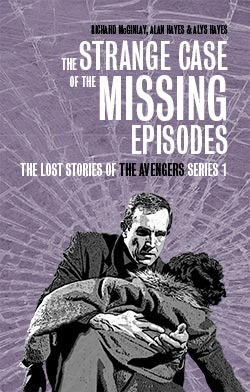
avengers_strange_case_cover

Seldom do I attempt book reviews on this blog, but this is a special exception because it relates to The Avengers and my ongoing obsession with that strange, sometimes confusing, and always interesting show. Season 1 of The Avengers has long been a difficult nut to crack. All that remains of that season in watchable form are two and a third episodes – one of which that does not even feature the two lead characters of the show. With such limited material, it’s nearly impossible to consider the season as a whole, despite being the foundations on which every subsequent permutation of the show was based. So it is a fine and wonderful thing to come across The Strange Case of the Missing Episodes, which attempts to fill at least some of the gaps in that first year.

Editors Alan Hayes, Alys Hayes, and Richard McGinlay gather together all the existent information on that first series, episode by episode. Using available camera scripts, plot synopses, and tele-snaps, they attempt to put together as complete a picture of each individual episode as possible. Following a brief introduction that explains why the first season is largely missing (and what we can do if we happen to have a copy of those original lost episodes), the authors dive into the thick of the season itself. The episodes that have existing scripts are the most well-developed reads, with extensive excerpts of dialogue and stage direction in the midst of the plot synopses. Other episodes for which no scripts or even complete synopses are available are harder to comprehend, but Hayes and McGinlay have done an excellent job of piecing together information to produce a basic synopsis, act by act. Some episodes require a leap of faith on the part of the writers, as they describe plot elements that might or might not be included – but even these are always footnoted with information about how the writers came to their conclusions, and where they simply made educated guesses on plot development and complications.

patrick-macnee-ian-hendry

The book is interesting and remarkably easy to read, an opportunity to experience the first season first-hand with minimal editorial interference. The characters of Keel and Steed are sharply drawn in the synopses and scripts – Keel in particular is fascinating, as we have so little of Hendry’s actual performance as a reference point. The nascent aspects of Steed are also present; though not, unfortunately, the development that Patrick Macnee himself gave the character. It is a revelation to see where the “undercover man” came from, knowing where he went. These episodes are much more noir in tone and characterization than later Avengers incarnations, though there are the occasional bizarre plots, weird secondary characters, and diabolical masterminds that will feature in later seasons. Many of these episodes are darker in tone than anything that even in the Gale period, with Steed and Keel doing battle against vice rings, assassination attempts, and organized thugs. There is a healthy dose of humor in most, however, mostly provided by our dynamic duo. One can see the development both of the characters themselves, and their relationship, with Keel usually strenuously objecting to Steed’s apparent callousness and tendency to use people to his own ends, while Steed blithely goes on his way, playing the hero. The least interesting episodes, for my money, are the ones that remove one partner, leaving the other to his own devices.

Unfortunately for the reader, The Strange Case of the Missing Episodes includes none of the tele-snaps or images from the original productions, which would have strengthened the experience of reading original scripts from a television show. This can hardly be laid at the door of the writers, as obtaining rights to these images is a complicated and expensive endeavor, but it’s a shame nonetheless (many images can be seen, albeit watermarked, on the Rex Features website and on The Avengers Dissolute website). Not included in the book are the two full existing episodes The Frighteners and Girl on a Trapeze – this also seems like an oversight, as their presence would have at least been helpful in painting a complete picture of the season (although it is understandable that the authors would not want to include two episodes that we can watch for ourselves).

There is really very little to object to in The Strange Case of the Missing Episodes, and then it is mostly nitpicking. It gives the most complete picture of each episode now possible, and in many cases had me longing for a real look at the original shows. Take my advice: avoid the overpriced and poorly cast Big Finish productions that attempt (and fail) to give us a taste of the original Avengers. Jut The Strange Case of the Missing Episodes, and try to imagine Patrick Macnee and Ian Hendry running around subterranean London in pursuit of dastardly spies and dangerous criminals. I think you’ll be pleasantly surprised.

The Haunted Palace (1963)

The Haunted Palace (1963)

the_haunted_palace_poster

The Haunted Palace combines four – FOUR! – of my favorite things: Edgar Allan Poe, H.P. Lovecraft, Roger Corman, and Vincent Price. As such, there’s almost no place that this film can go wrong.

With a title and epigraph lifted from Edgar Allan Poe’s poem, The Haunted Palace is actually based on the Lovecraft story The Case of Charles Dexter Ward, about a man possessed by the evil spirit of his long-dead relative (a gross oversimplification of the story, but bear with me). Roger Corman’s adaptation takes a remarkably faithful approach to that story; which, given the serious problems with adapting Lovecraft, is quite impressive for a 1963 film. Vincent Price opens the film as Joseph Curwen, a suspected warlock living in a massive palace above the village of Arkham. Young girls begin vanishing during the night, only to reappear again the next day with no memory of where they’d been. The latest abduction results in the town rising up against Curwen and his unnatural necromantic tendencies. They burn him in his own front yard, but not before he’s placed a curse upon their children and their children’s children, promising to return to wreak terrible vengeance.

Moving forward about a hundred years and Charles Dexter Ward, Curwen’s great-great-grandson, reappears in Arkham to take over the lease on his relative’s estate. Along with his wife Anne (Debra Paget, Ward is met with violent hostility from the townsfolk, all of whom bear remarkable resemblances to their great-great-grandfathers. As explained by the kindly Dr. Willet (Frank Maxwell), Curwen’s curse and Ward’s uncanny resemblance to his forebear is just the tip of the eldritch iceberg. Curwen was apparently trying to summon the Elder Gods, his activity taking the form of drawing creatures out of the abyss and mating them with the local girls, resulting in children with bizarre deformities (whose descendants at one point menace Ward and Anne). Now the town fear that Curwen has returned in the form of Ward to take vengeance and begin his work again – a fear eventually realized when Ward moves into the palace and Curwen begins taking over the body of his relative.

the haunted palace 05

The Haunted Palace follows at least some of the plot of Lovecraft’s novella fairly closely, albeit with some notable changes. The action centers on Curwen’s slow possession of Ward, with the help of his partner-in-necromancy Simon Orne (Lon Chaney Jr.). The film introduces the very Lovecraftian themes of violation, degeneracy, family curses and, of course, the Elder Gods, all mixed together in a hodge-podge of lurid detail. The only truly sympathetic characters in the film are Ward, Anne, and Dr. Willet; the townspeople are venal and cruel, though they might not deserve the fate that Curwen eventually dishes out to them. Under Corman’s direction, The Haunted Palace draws out the sexual underpinnings of the story without veering into exploitation. In a movie that includes roasting people alive and offering women up to creatures from the abyss, the most disturbing scene is Curwen’s attempted rape of Anne while in the body of Ward.

Supported by a uniformly excellent cast, Vincent Price is of course the star of the show – and how he seems to enjoy it! His transformation between Ward and Curwen is effected with minimal make-up, instead relying on Price’s remarkable expressiveness of face and voice. Though Price has often been maligned as a ham actor, his ability to summon sympathy for villains and horror for heroes is a talent that Corman honed in the Edgar Allan Poe adaptations. Here it is on full display, to excellent and chilling effect.

The other actors are almost as enjoyable as Price, although they have considerably less to do. Paget deserves her share of the accolades, playing Anne as a damsel in distress still able to operate on some of her own initiative. There’s a wonderful and heart-breaking pathos to Ward and Anne’s relationship, as Anne is forced to deal with a husband who looks like himself and demonstrably is not. Then there’s Lon Chaney Jr. (here billed just as Lon Chaney), whose sad-eyes and sympathetic face conceal a true monster this time around.

The Haunted Palace does exactly what it sets out to do, and is successful as far it goes. While some of the opening sequences drag a little, particularly Ward and Anne’s arrival in the village, the narrative bounces along at a good pace, with little additional flourishes to distract from the central thrust of the story. It’s an early Lovecraft adaptation, but a remarkably successful one. Besides, how often do you get to see Vincent Price psychologically torturing Vincent Price?

the-haunted-palace-price-portrait

Bloody October: Fright Night (1985)

Fright Night (1985)

fright_night_1985

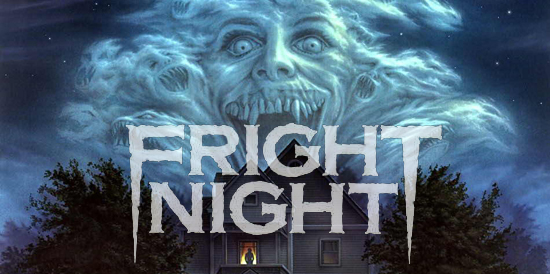
Yet again, I am a big horror fan and yet, somehow, I have managed to miss seeing the original Fright Night before now. This has been properly rectified, and I am pleased to say that the hype was not misplaced.

Fright Night tells the story of Charley (William Ragsdale), a high school student who decides that he’d rather watch the weird neighbors next door than have sex with his girlfriend Amy (Amanda Bearse). Although I know that subsequent events were largely out of Charley’s control, there still seems to be a moral in that story: sex first, vampires later. What Charley does see that fateful night are his new neighbors moving a coffin into the basement; this, in addition to the appearance on the TV screen of Fright Night, a late-night spookfest featuring “vampire killer” Peter Vincent (Roddy McDowall), provokes Charley to believe that his neighbor might be a vampire. This is later confirmed by the arrival and subsequent disappearance of a prostitute, whom Charlie sees going into the house. When the prostitute later winds up dead, Charley’s suspicions are confirmed. Consulting his friend “Evil” Ed (Stephen Geoffreys), Charley learns about the best way to fight against vampires – but not before his mother has invited the offending creature into the house. And no wonder! Our vampire is dashing Jerry Dandridge (Chris Sarandon), by whom most of us would not object to being bitten. Will sexy vampire triumph over horny teenager? We’ll just have to wait and see!

fright-night-1

Fright Night makes excellent use of the vampire mythos we all know so well – and anyone who has ever watched a vampire movie, from Dracula to Dracula Untold, will recognize certain important rules that are made, subverted, and at times even broken. The film melds tradition with a unique story, as the vampire moves in next door and heads to dance clubs. Dandridge is a charming but wholly unsympathetic villain, avoiding at every turn the pitfalls of modern vampires that are just “misunderstood.” He’s not misunderstood – he’s an evil lord of the undead, taking sadistic pleasure in torturing Charley (whom no one will believe) and seducing fair young maidens. While I cannot avoid thinking of Chris Sarandon as Prince Humperdinck from The Princess Bride, he makes a credible vampire.

Roddy McDowall is the other major force at work here, channeling everyone from Peter Cushing to Vincent Price (Peter Vincent, anyone?), with a smattering of Elvira. He’s an actor playing a vampire killer, now faced with an actual vampire – and when he finally gets into the swing of things, it’s a pleasure to watch. The other actors in the group are a cut below McDowall’s hamming, the most obnoxious being Evil, who shouts and giggles like a demented Renfield to no apparent purpose. Charley and Amy are likably bland, as are most heroes and heroines in vampire stories.

My sole objection to Fright Night is a reveal nearing the end, where a rule hitherto established and accepted is bent and then broken with little to no explanation. Vampire movies depend upon their rules: if your vampire is repelled by crucifixes but not by garlic, can’t cast a reflection in glass but can in water, all well and good. But you don’t introduce a new and non-traditional rule at the eleventh hour and then fail to explain it. That’s just bad form.

But for that single caveat, Fright Night is a glorious love letter to the vampire genre and a classic in its own right. There are no sparkly vegetarian vamps here: these guys are strictly carnivores.

fright-night-1985-jerry-dandridge-charley-brewster-vampire-chris-sarandon-william-ragsdale

Bloody October: The Last Man on Earth (1964)

The Last Man on Earth (1964)

the-last-man-on-earth-poster

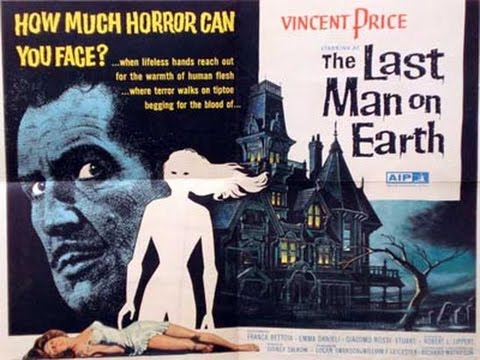
If humanity were to suddenly be subject to an airborne disease that turns its victims into the walking dead, who do you think would be the last man standing? No, not those idiots on The Walking Dead. Only one man could possibly survive the zombie/vampire apocalypse, and look good doing it too: Vincent Price.

Based on the Richard Matheson novel I Am Legend, The Last Man on Earth stars our Mr. Price as Dr. Robert Morgan, a biologist who has spent three years as the only man on Earth apparently not infected by a horrific airborne plague that claimed his wife, daughter, and best friend. The film takes us through Morgan’s typical day as he awakes, hangs garlic over his doorway, and heads out into the abandoned city with a bag of wooden stakes to find and destroy more of the vampiric creatures that were once the human population. He has to return before the sun goes down, though, for the vampires come banging on his door, threatening to kill him. He spends some time trying to get into radio contact with other living beings, but all to no avail. It appears that he truly is the only man left alive.

the-last-man-on-earth-price

The Last Man on Earth reportedly inspired George Romero to make Night of the Living Dead, so all you Zombie-philes should get down on your knees and praise this weird little movie. This is a zombie movie before there were zombie movies, but the vampiric creatures share much in common with Romero’s later conception of the walking dead. Half brain-dead and only really powerful in numbers, the vampires seem to lack basic organization, banging on Morgan’s door and shouting threats without being able to organize themselves well enough to actually break into his house. Morgan’s contempt for the people that were once his friends is pathetic. In a flashback sequence, we learn of the origins of the plague, and of the slow decay of surrounding civilization as more people fall victim. When Morgan wanders the deserted city in search of vampires, the film provides an effective sense of the desolation and loneliness of streets without people and stores left empty. There is something horribly realistic in the first 3/4s of this tale of worldwide pandemic, the terror and mistrust perhaps all too real in this day and age.

Price gives one of his most affecting performances, at once sympathetic and slightly sinister as he struggles with his day-to-day existence, forced to burn the mutilated bodies of the vampires. He’s the only character on screen for most of the film’s runtime. Despite the somewhat hokey voiceover that was far too common in films of this period, Price’s performance elevates the film (as his performances so often did) – his elation at spotting a dog running loose in the streets is heartbreaking, for here he sees at last some hope of companionship in his long, lonely existence. Morgan is a monster and a hero in the same breath, and his suffering plays out over the contortions of Price’s remarkably expressive face.

The weakness of The Last Man on Earth lies in its denouement, which I won’t spoil for the reader. A relatively effective set-up is punctured in the final act, leading to a curiously unsatisfying conclusion. While miles ahead of its successor I Am Legend, starring Will Smith, The Last Man on Earth does not quite make good on its narrative promises.

Yet for all that, there is much to like about this odd little film. Price here embraces the melancholic suffering so prevalent in many of his best performances. He has taken the world’s cares on his shoulders, and become a monster in the process. Nothing could be so heart-breaking.