The Avengers: Brief For Murder

Brief For Murder (Episode 03-01, September 1963)

steed-cathy-brief-for-murder

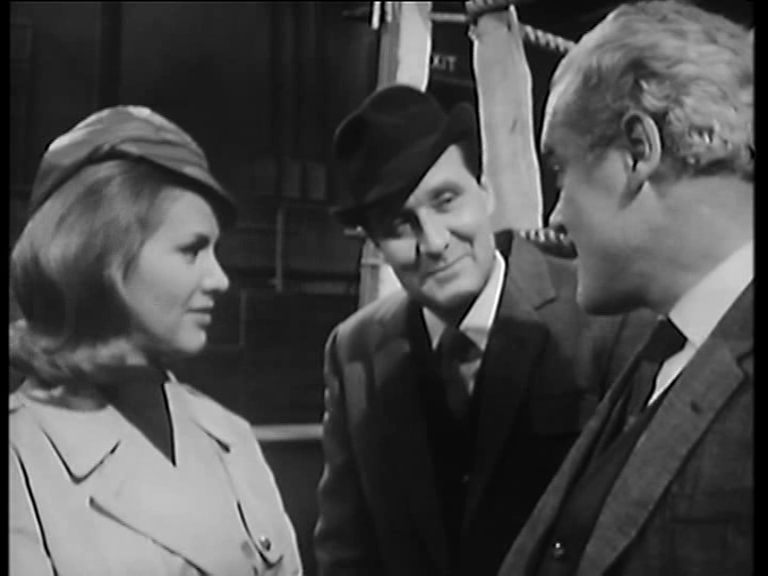
Season 3 of The Avengers got off to what can only be described as a unique start. Brief For Murder opens with the public trial of Wescott (Alec Ross), a man charged with selling government secrets to an unidentified recipient known only as Johnno. Wescott gets off due to the brilliant machinations of his solicitor Barbara Kingston (Helen Lindsay) and the Lakin Brothers, Jasper and Miles (John Laurie and Harold Scott). Cathy Gale is on hand for the verdict, and makes it publicly known that she still believes that Wescott is guilty, and that none other than her erstwhile friend John Steed is the mysterious Johnno. Furious at her insinuations, Steed threatens Cathy and then lawyers up with the Lakin Brothers. The brothers, it turns out, have been making a mint by engineering criminal cases to get their client off scot-free. When Steed appears and asks them to help engineer a case so he can murder Cathy, they’re only too happy to oblige.

Brief For Murder side-steps a problem that some later episodes of The Avengers would have: letting the viewer know more than the characters. Instead, a good half of the episode has Steed and Cathy at murderous odds, the purpose behind their apparent hatred of each other kept unclear. The result is one of the more intelligent episodes in Season 3, beginning a character arc of mutual distrust between Steed and Cathy that would have some sort of conclusion in The Nutshell. Although we’re fairly confident that Steed is not actually trying to murder Cathy, just what he’s up to – and how much she knows – remains ambiguous until the third act.

A competent cast reinforces an original and intelligent plot. Aside from the usual pleasure of watching Patrick Macnee and Honor Blackman verbally fence, there the added enjoyment of the bizarre and gleeful Lakin Brothers, played by John Laurie and Harold Scott. Laurie is one of the best recurring character actors to appear in The Avengers – he already popped up once in Death of a Great Dane, and would return for the Emma Peel episode A Funny Thing Happened On The Way To The Station. The Lakin brothers are so excited to be able to work out legal arcana in service of their nefarious clients that they can almost be forgiven the whole criminal thing.  As Steed quips nearing the end, “I’m going to miss them.”

While Brief For Murder never rises to the heights of humor or eloquence that some Season 3 episodes achieve, it’s nevertheless one of the better ones.

The Avengers: The Nutshell

The Nutshell (Episode 03-04, October 1963).

steed-cathy-nutshell

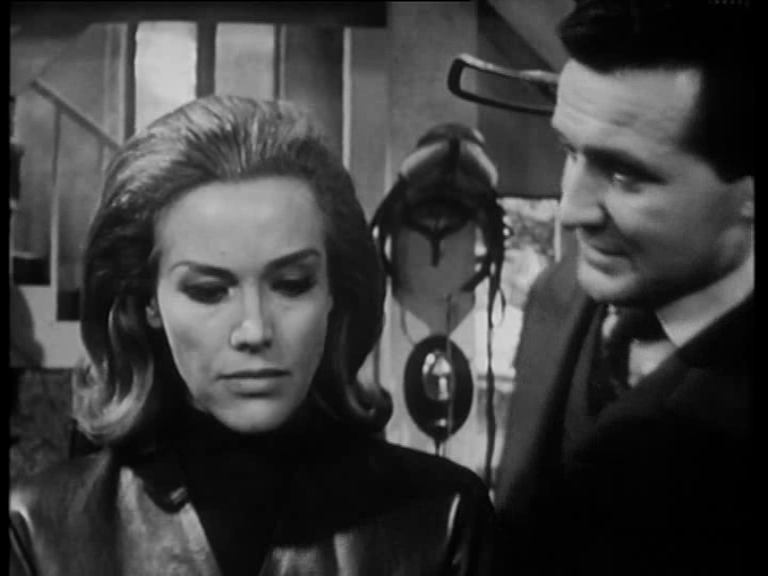
Directly following the disturbing doppelgänger episode The Man with Two Shadows (read about that one next week), The Nutshell features another development in the Steed and Cathy relationship, straining it almost to the breaking point. The pair are called in to investigate a break-in and possible sale of government information from a secret nuclear bunker called Nutshell. Steed’s odd behavior concerning the investigation begins to worry Cathy, however – especially when it’s discovered that he’s had several meetings with the girl who broke into the facility. Steed is arrested for espionage and imprisoned at Nutshell, where he undergoes torture at the hands of his own security organization.

The Nutshell plunges us deep into the heart of the spy organization that Steed works for, drawing into question his loyalty. Following so close on an episode that ends semi-ambiguously in terms of Steed’s identity and his relationship to Cathy, The Nutshell focuses tightly on the character relationships and what the pair don’t tell each other. Steed is tortured by the very people he has sworn loyalty to and interrogated without trial. At one point, Cathy asks a representative of Nutshell whether they obey the same moral laws as the rest of the world, to which she is given the curt reply that the only crime in Nutshell is endangering security. It’s a murky world, and one which Cathy is evidently not comfortable with. She watches Steed’s torture on closed-circuit cameras, and the acute nature of her own suffering reflects in Blackman’s face.

Steed, meanwhile, further complicates the viewer’s feelings about him. Some strong editing of scenes means that the audience is kept guessing as to his motives. He and Cathy engage in several discussions about their nature of their work, revealing something of Steed’s personal politics and the strain his job puts on him. Unlike James Bond, Steed was never a character who seems superhuman. If anything, he’s more flawed and less sure of himself at times than Bond, but has the makings of a true hero beneath it all. Macnee is always a good comic actor, but here he shows that he can play drama just as well.

The Nutshell represents the best of Season 3 in terms of pacing and performance. There’s barely a misstep – a remarkable feat for an episode of live TV with numerous location changes and complicated sets. The secondary cast, including Avengers regulars John Cater and Patricia Haines, is excellent, as cold and precise a set of bureaucrats as you can ask for. If there’s a single problem with the episode, it’s the somewhat perfunctory conclusion which, following a very intense series of events, feels a little sudden and anti-climactic. However, that’s a small quibble in what is otherwise a superb episode.


The Avengers: Mandrake

Mandrake (Episode 03-18, January 1964).

steed-cathy-mandrake

I had intended to try to keep to the order in which these episodes aired, but I cannot hold my tongue about one of my favorite Avengers episodes.

In Mandrake, Strange things have been going on in the graveyard of Tinby, including the burial of an abnormal number of men who were never in Tinby in their lives. Steed’s interest is piqued with the death of a work colleague and his burial in the same graveyard. Steed and Cathy set about investigating the deaths, which leads them into a seedy world of a two-man Murder Inc., made up of Dr. Macombie (John Le Mesurier) and Roy Hopkins (Philip Locke), who help heirs to organize the murder of prominent men.

Mandrake has so much to recommend it, I don’t know where to begin. The secondary cast elevates the episode – Le Mesurier and Locke are both excellent character actors in their element here (they pop up in earlier and later episodes, making them among the most dependable doppelgängers in the series). The addition of Annette Andre as Judy, a shopgirl who works for Hopkins, provides some of the most charming repartee in the episode. She and Steed develop a quick flirtation with such easy, light chemistry it almost makes one wish that Andre had come back a few more times (she does crop up in a much later episode of spin-off series The New Avengers, but has no scenes with Macnee).

Mandrake also balances its two leads admirably, giving Steed and Cathy plenty to do together and separately. Cathy goes off to interview the vicar of the Tinby church where the murdered men have been buried, while Steed trails Hopkins and flirts with Judy. Steed roughs up the son of his old friend, and Cathy has an exciting graveyard fight with the local gravedigger – a fight which ended with Blackman accidentally knocking out her opponent. While there’s a bit of a dearth of Steed and Cathy banter to be had here, it’s more than made up for by the exchanges between our leads and the secondary characters.

Sharp and tightly written with excellent pacing, Mandrake really stands at the top of the Cathy Gale series, and is arguably one of the best Avengers episodes period.

The Avengers: Killer Whale

Killer Whale (Episode 02-26, March 1963).

killer-whale-steed-cahty

Killer Whale, the final episode of Season 2, takes Steed and Cathy into the underground world of boxing and its unlikely connection to the perfume trade. Steed has discovered a possible link between the boxing ring belonging to ‘Pancho’ Driver (Patrick Magee) and the illegal smuggling and sale of ambergris, a key ingredient in the production of perfume. Steed enlists Cathy and her young boxing protege Joey (Ken Farrington) to infiltrate Pancho’s ring and discover who’s doing the smuggling and how. Meanwhile, the bowler-hatted one draws the more cushy job of hanging around a perfumier and fashion designer’s establishment, under the guise of obtaining a wardrobe for his “niece,” to see where the ambergris is actually going. This being The Avengers, complications naturally arise, including murder, imprisonment, and the use of Cathy’s judo skills.

In some ways, Killer Whale is a last hurrah for the more underworld-themed episodes of Season 2. Season 3 will be a bit more refined – though not without its deviations – and occupied far more with the British upper-classes. As such, Killer Whale is a nice transition, with the charming Joey facing off against the less-charming Pancho, and expanding upon the connections between a criminal underworld and the clean-cut upper world of fashion designers.

Although the boxing angle is quite fun, the best parts of Killer Whale take place at the perfumier’s. Steed has a slightly tense tete-a-tete with a posh young man who keeps referring to him as “sport” – another chance to underscore class conflict, as the same young man turns out to be the most vicious criminal of the bunch – as well as the chance to make eyes at the attractive young models wandering around. Steed certainly draws the plumb job on this one, his not-inconsiderable charm in full force right alongside his inherent ruthlessness. Cathy meanwhile has to do the dirty work, which usually gets her either imprisoned or tied up.

Killer Whale concludes the second season on a fairly high note, with our two heroes getting along pretty well (and Cathy moved into a brand new apartment). When they return in Season 3, two against the criminal factions, they’ll do so with slightly less conflict but, oddly enough, slightly more distrust. Season 3 will feature Steed possibly turning traitor more than once, and a tightening of their friendship that will make them, in the end, the most complicated relationship that The Avengers will ever feature.

The Avengers: Bullseye

Bullseye (Episode 02-04, October 1962).

steed-cathy-bullseye

Only four episodes into Season 2, Cathy Gale gets her first opportunity to strike out on her own in Bullseye. Faced with a murder at a small arms company that may be tied to gun-running in Africa, Cathy joins the company’s board of directors as a shareholder, plunging herself into industrial espionage and conspiracy. Steed is on hand but remains solidly in the background for this one, only showing up once or twice to tease Cathy and smoke cigars.

Cathy uncovers a series of nasty coincidences as more fellow board members are murdered, narrowing the range of suspects to about three by the end of it. It’s all tied in with a takeover bid by industrialist Henry Cade (Ronald Radd), who intends to purchase the company and carve it up at a profit. Cade is suspect number one, as each of the directors dies after meeting with him, but there are several others that are equally nasty pieces of work: Doreen Ellis (Judy Parfitt, who pops up pretty consistently through The Avengers), and Mr. Young (Felix Deebank), a ladykiller with a smarminess all his own.

Giving Honor Blackman her own episode this early in the season was a gamble for The Avengers (regardless of production order), and it’s a shame she didn’t get a better one. As with a number of these early episodes, Bullseye suffers from the combination of a preponderance of plot, and dialogue that fails to drive it. Steed’s absence does not have to harm an episode (check out The Big Thinker if you don’t believe me), but in this case poor Cathy has very little to occupy her time. The villains are fairly clear from the outset, and the ending both unsurprising and anti-climactic. Cathy has no opportunity to show off her fabulous judo skills (despite setting up a villain with whom she could easily grapple), and much of the interesting action takes place off-screen.

However, Bullseye is not all bad. On a second viewing I actually found it more enjoyable, with at least two scenes that create excellent tension and remind us that Cathy is quite the badass. Ronald Radd’s Henry Cade is simply delightful, an irascible millionaire entirely at home in his business. The episode pops when he’s onscreen. Finally and as always, the few scenes between Cathy and Steed have an energy all their own, as their combative relationship makes even a friendly meeting into a battle of the sexes.

So put Bullseye in the “miss” category. It isn’t a bad episode by any means, but there’s not a great deal to be said for it.

The Avengers: Six Hands Across A Table

Six Hands Across A Table (Episode 02-25, March 1963).

steed-cathy-six-hands

Following Venus’s departure, Cathy Gale returns for an episode more or less on her own – and for the first (and last) time, romance is in the air! Cathy has become involved with shipyard owner Oliver Waldner (Guy Doleman), ostensibly on the strength of her schoolgirl friendship with his sister (?) Rosalind (Sylvia Bidmead). But there are nefarious dealings afoot when one of Waldner’s business colleagues dies a suspicious death after refusing to participate in a deal that would give Waldner and friends control of a large section of British shipbuilding. Steed is on hand, of course, to prove that Cathy’s boyfriend is a killer.

Six Hands Across A Table suffers from a number of confusions between characters, both personally and professionally. Waldner and his colleagues are apparently attempting to push through a deal that would keep British shipbuilding in their control, while the murdered man and his son, who takes over his father’s company, attempt to work with a French firm that would take some shipbuilding out of the country. The plot is a little complex for an hour episode, and unfortunately focuses a bit too much on some rather complex backroom business deals to be interesting.

The other source of confusion appears in Cathy’s relationship to Oliver and Rosalind. At first I thought Rosalind was Oliver daughter, based on the way they relate, but Oliver is far closer to Cathy’s age and her and Rosalind were meant to be at school together. Some of the confusion is a result of Cathy visibly being in her early to mid-thirties, while Rosalind looks much younger. It is at times difficult to understand the relationship of the characters as a result.

Beyond confusions in the plot, however, Six Hands Across A Table hangs together rather well. It is the only time that Cathy has a romantic interest – and she makes quite a terrible choice. Waldner is a cold-blooded killer who treats murder like a business venture. When Steed warns Cathy of her lover’s possible criminal activities, she attempts to dismiss him – but is obviously shaken. Blackman gives an excellent performance here; she’s gotten in too deep and made the mistake of falling in love with a man she’s supposed to be investigating. While Steed offers little solace, couching his suspicions in his usual flippant manner, he’s earnestly concerned to keep her out of trouble.

There’s a touching scene that highlights Steed’s increasing sensitivity, and inherent decency, as well as Cathy’s intense guarding of her emotions. More and more we see that these are two people who protect themselves from emotional pain, but actually care very deeply for one another. The episode is worth it for that scene alone.

Mister Jerico (1970)

Mister Jerico

mister-jerico-movie-poster-1970-1020363566

Following the conclusion of The Avengers in 1969, a number of the cast and crew decided it was a good idea to take themselves off to the sea and sand and make a movie. The result was Mister Jerico, intended as a TV pilot that never got off the ground. It was released theatrically in the United Kingdom, and then as a TV movie in the U.S.

Patrick Macnee is Dudley Jerico – whose theme song leaves a little to be desired – a thief/con-man (with scruples) out to con a nasty millionaire Russo (played by the always nasty, always enjoyable Herbert Lom) out of a few million dollars. Jerico’s pal Wally (Marty Allen) helps with the endeavor – and there is of course the lovely Susan Grey (Connie Stevens), Russo’s secretary and Dudley’s love interest. Things get complicated when a mysterious French woman pops up trying to pull the same caper, involving the theft and sale of a rare diamond.

Mister Jerico is one of those charming and fluffy capers that the 1960s did well, quite similar to the higher- budgeted Gambit or How to Steal a Million. The palette is sun-soaked, the plot buoyant and just this side of ridiculous. The second half of the film in particular moves along at a nice pace, complicating matters without making anything seem too serious. If you think too deeply about the story, it will all appear very nonsensical, but this is a stylized caper film not intended for deeper scrutiny. It’s a surface film and as such it’s quite enjoyable.

macnee-stevens-jerico

Patrick Macnee is a likable screen presence and good light comedian, playing Jerico with the same dash of wit and energy that he possessed as John Steed. He’s a somewhat limited actor, but works within those limitations to create a charming, erudite con man.  His wardrobe is also nothing short of spectacular – if that’s the word for it – with bright prints, flashy trousers, and a blue velvet fedora that Superfly would be proud of. Herbert Lom is an excellent counterpoint: a sharp, venal heavy, who fully deserves anything the cons can throw at him.

Connie Stevens meanwhile seems a touch out of place as Susan. While she and Macnee have heat, her somewhat breathy line delivery and slight air-headedness don’t quite gel with her role, which becomes more complex  as the film goes on. Still, she’s not an uninteresting leading lady, though I could name about ten actresses that might have played the light part with a bit more depth.

Mister Jerico is the height of 1960s silliness, and as long as one expects nothing more it makes for a diverting few hours. While I understand why it was never picked up as a pilot, it’s no less ridiculous than The PrisonerThe Persuaders, or any other stylized TV show from the same period. I have a soft spot for stylized films – all the more so if they happen to feature actors and actresses I enjoy. While not quite high camp, Mister Jerico is a lot of fun.

The Avengers: A Chorus of Frogs

A Chorus of Frogs (Episode 02-24, March 1963)

steed-venus-frogs-razor

 A Chorus of Frogs is the final Venus Smith episode to air, and actually manages to be my favorite of her six entries into The Avengers canon.

Steed has gone on holiday to Greece, but the mysterious death of a diver/spy interrupts his enjoyment of the sea and sand. So Steed hops onto millionaire Mason’s (Eric Pohlman) yacht, the site of the man’s death and the location of his three fellow “Frogs,” a team of smugglers/divers/spies. Venus Smith just so happens to be providing entertainment for the cruise around the Mediterranean – but she’s none too happy when Steed puts in his appearance in her cabin, insisting that he be allowed to sleep there. All is not well on the boat, of course – the death of another diver complicates matters, as does the presence of Anna Lee (Yvonne Shima), apparently a Chinese operative. Meanwhile, Venus appears to have finally gotten fed up with Steed’s insinuation into her life, and just about gives him up as a stowaway when the excitement gets the better of her.

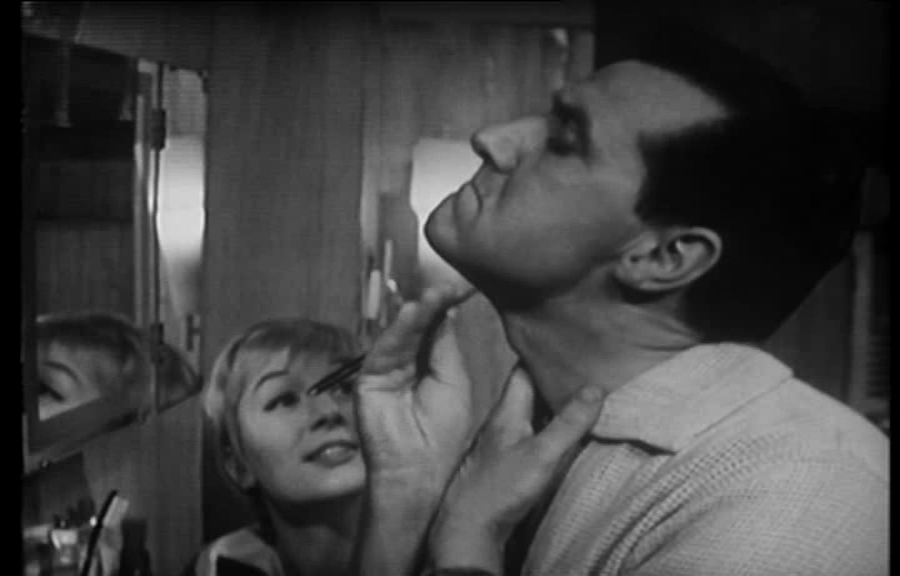
A Chorus of Frogs moves along at a good pace. The plot is somewhat sparse, but what it lacks in narrative sense it makes up for in characterization. Peppered with excellent character actors, including John Carson as the diver Ariston, the dialogue snaps better than any other Venus episode. Some excellent rapport between Venus and Steed show just how tired she’s become of his constant invasions, as she gleefully watches him trying to shave with a dull straight-razor. Steed is rather put-upon throughout the episode, threatened at gunpoint by the female diver Helena (Colette Wilde) in a scene that becomes a running gag. But it’s a dashing, water-soaked story, with some strong tension at the climax.

Although Steed might at times put his partners into harm’s way (often without their knowledge), he never wants to hurt anyone and usually goes out of his way to make certain that innocent people aren’t harmed. A Chorus of Frogshows off both his humor and his strong sense of justice – he has a desire to do right, and to protect as many people as he can, especially those he feels a personal responsibility towards.

Venus Smith exits the series here; it’s a shame she wasn’t given a better chance to develop. While Stevens’s musical numbers might grate just a bit, Venus had some potential as a character if she could have shaken some of her naivete. However, like Dr. King before her, the writers evidently did not know what to do with her. So out she goes, making the way for Cathy Gale as the only partner willing to stick it out with Steed, which is probably just as well.

The Avengers: Conspiracy of Silence

Conspiracy of Silence (Episode 02-23, March 1963).

steed-conspiracy-of-silence

Circus clowns! The Mafia! Assassination attempts! Knife-throwing! This episode should have it all. So why doesn’t it quite come off?

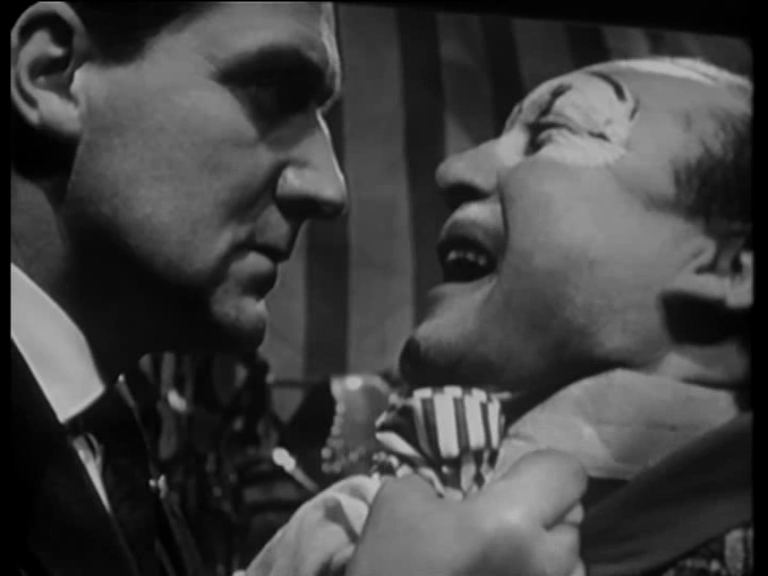
Conspiracy of Silence starts off well. Circus clown Carlo must assassinate Steed or face dire consequences from the Mafia’s envoy. The assassination attempt fails (as it would) and Steed sends Cathy to hang out at a local circus in a bid to locate the assassin who failed to kill him. There Cathy finds herself (once more) in the midst of family drama, as the wife of the circus clown cum assassin apparently has no idea where her husband is. Meanwhile the Mafia man hangs around in the hopes of finding Carlo and forcing him to do the job.

The drama here takes a front seat to the actual plot, with Cathy trying to be sympathetic to everyone involved. The wife fends off advances from the Ringmaster, the Mafia man threatens loudly, and the various clowns and performers are all suspect in helping to keep Carlo under wraps. Unfortunately this seems to mean that a lot of nothing happens for most of the runtime, with the best action packing into the last ten minutes or so. Carlo is a somewhat sympathetic antagonist, caught between having to commit a horrific crime or be sent back to Italy, where the Mafia will do away with him. Yet I found it difficult to feel any real sympathy for a whiny and weepy character, or his oft-hysterical wife.

What Conspiracy of Silence has, though, are two excellent scenes between Steed and Cathy, highlighting their inherent differences and the development of their characters. When Steed appears at the circus to discuss Cathy’s findings, they stand at odds with each other: Steed wants to force Carlos into the open, while Cathy tries to convince him that it’s better to offer Carlos a deal rather than frightening him. Steed accuses her of idealism, she accuses him of cynicism, and the whole thing ends with Steed shaking his fists and storming off. It’s a dynamic little scene, complemented by the later sequence in which Cathy hears two gunshots and believes that Steed has been murdered. When she discovers that he survived, the pain on her face is real – her fear of losing him shows the chinks in her otherwise impenetrable emotional armor. It’s a brief moment, but it ends the episode with a strange poignancy for The Avengers. Cathy has truly begun to care about Steed, even though she doesn’t want to show it. 

At the end of the day, though, Conspiracy of Silence is one of the lesser episodes, despite a setting that offered many opportunities for some campy fun.

The Avengers: Man In The Mirror

Man in the Mirror (Episode 02-22, February 1963).

man-in-the-mirror-steed-venus

With Cathy Gale saving the world from exploding stars, what is there for Venus Smith to do except wander an amusement park? Venus returns in her penultimate episode Man in the Mirror to assist Steed in proving that a cipher expert who recently committed suicide might not actually be dead.

The impetus for the investigation comes when Venus wanders the amusement park where the man committed suicide and happens to snap a picture of him in a funhouse mirror – several days after he’s supposed to be dead. This is enough to launch her and Steed into the weird world of the amusement park, where they discover family drama, people held hostage, and a possible treacherous plot in the offing.

Steed’s superiors make a few appearances during the second and third seasons of The Avengers (and thankfully disappear for the entire Mrs. Peel series). This time Steed finds himself somewhat at odd with his boss, who accuses him in the opening scenes of being a lone wolf, declining to play by the rules. It’s a neat little scene, and highlights what makes Steed so likable in the early seasons – while he might dress the part of a traditionalist, he’s quite far from it.

Venus, meanwhile, has fully transitioned into a teenager. When Steed brings her back to the amusement park, she’s carrying a teddy bear and chewing on a candy-apple. The dynamic between them has ceased to carry any possible sexual implications – Steed not only towers over her physically, but she’s apparently regressed from a twenty-year-old to a seventeen year old. Her continued naiveté about Steed’s profession remains inexplicable – this is the fifth time he’s involved her in a case, and a fifth time that she’s gotten in too deep.

The uncertainty of Venus’s character might very well be what got her eliminated from The Avengers altogether. There’s no ambiguity between Steed and Cathy on a professional level – she’s well aware of his job, and he never tries to fool her about it. Yet Venus goes between having a competent understanding of Steed’s work, and an apparent ignorance that seems laughable this late in the game. The youth/age dynamic (which will unfortunately reappear in the much later Tara King season) means that there’s little chance for parity between them – Venus is far too much of a child to be a proper partner.

There are some enjoyable moments in Man in the Mirror, however. The villains capture Venus at the climax, revealing one or two salient details about their plot that on first viewing quite surprised me. Steed’s dedication to protecting her is quite sweet, even if he does always get her into trouble in the first place. While it’s a far cry from my favorite Venus Smith episode, Man in the Mirror can make for a diverting 50 minutes.