Dracula A.D. 1972 (1972)

Dracula A.D. 1972

dracula-ad-1972

Hammer Studios went into decline as they skated into the 1970s. Their returns would rapidly diminish; they would begin replacing their brand of well-made camp horror with ever greater exposure of skin, blood and pointless violence. But there were a few remnants of the old Hammer as the studio went into the 70s, and none is weirder, or more enjoyable than Dracula A.D. 1972.

The year is 1972 (in case you missed it) and Count Dracula has been dead for 100 years. But his acolytes live on, and it’s time for the King of Vampires to return to wreak havoc on the groovy chicks of swinging London. Dracula is resurrected by a bunch of bored hippies, led by the nasty Johnny Alucard (Christopher Neame). While the others take the whole satanist ritual as a big joke, Johnny is dead serious. Dracula returns from the dead, looking pretty damn good for being dust and ash for the past 100 years. He wants blood, and he wants it now; cue Johnny running around procuring sexy girls to satisfy Dracula’s bloodlust. But Dracula is particularly interested in chowing down on Jessica Van Helsing (Stephanie Beacham), one of Johnny’s friends and the youngest descendant of Laurence Van Helsing, who staked the undead Count. Meanwhile, Jessica’s grandfather Lorrimer Van Helsing (Peter Cushing) and a police inspector (Michael Coles) investigate the mysterious deaths of the young maidens that Dracula has been draining.

Dracula A.D. 1972 is the height of Hammer camp, with a groovy go-go soundtrack, crazy clothes and drug-addled hippies (what with their loose morals and blood-sacrificing ways). There are some uncomfortable parallels between Dracula’s murders and the Manson family killings that only took place a few years before; the film trades on the mainstream fear of the new generation, with the group of friends always looking for a new thrill. There’s an added fluid sexuality – Dracula’s acolytes are all men instead of brides – and, as always, the heaving bosoms and red-paint blood we all expect from Hammer.

But when you come down to it, no Dracula film works without Peter Cushing and Christopher Lee. Lee thankfully does not have to wander around swinging London or board a bus in his cape; he instead sticks to the de-sanctified churchyard while Johnny does his dirty work. Cushing and Lee are excellent adversaries, even when they barely spend a moment on-screen together: Cushing’s slight physicality, his solid Englishness, the quiet intensity with which he tries to protect those he loves, juxtaposed against Lee, tall, elegant, with booming voice and nearly black eyes. They make a great team, and Dracula A.D. 1972 brings them together once more.

Dracula A.D. 1972 might be the last great Hammer film. While it shows signs of wear and tear – and foreshadows the studio’s decline – it still has enough campy fun to go around, punctuated by some serious moments of true horror.

Bloody October: The Shining (1980) and Room 237 (2012)

The Shining (1980) and Room 237 (2012)

the-shining-poster

I’ve decided to combine my reviews of Stanley Kubrick’s The Shining with Room 237, the 2012 documentary about theories surrounding the meaning of The Shining. This is largely because just about everyone and their mother has written a review of The Shining and I have little new to add to the general consensus that it’s one of the scariest movies ever made.

The Shining (in case you’ve managed to miss both it and The Simpsons’ Treehouse of Horror sequence “The Shinning”) is about a nuclear family that decides it’s a good idea to hole up in a massive hotel in the mountains of Colorado, where they will see no one else for five months. The last caretaker happened to chop up his entire family into little tiny pieces, but whatever. Five months rent free!

You know the drill. Jack Nicholson goes all kinds of crazy – as if he wasn’t already – and chases Shelley Duvall and the adorable Danny Lloyd around with an axe after his ghostly friends tell him to. Kubrick creates a deep sense of wrong and foreboding from the very beginning. Subtlety is the name of the game in The Shining; the hotel seems off, with winding corridors that don’t quite make sense, offices with windows where there should be none, shifts in decoration that feel unnatural. The Shining trades on peripheral vision, the sense that something is just not quite right. Kubrick pulls this off by introducing or eliminating small elements in a single frame: a chair that’s there one minute and gone the next; a cigarette with smoke circling inward instead of outward. There are undercurrents of abuse – Danny’s shoulder was once dislocated by his father, though this is claimed as an accident – and unnamed violence. Is the hotel really haunted, or is this Jack having a breakdown? Does Danny cause the madness of his father, a mental projection of anger and hatred? It’s a fascinating, labyrinthine film that gives no real answers or explanations. As Scatman Crothers remarks to Danny, there are just traces left over from the past.

Room237

If The Shining is indeed a movie about traces, Room 237 spins a few convincing (and less convincing) yarns about those traces. Giving voice to some of the interesting, odd and often outlandish theories about the meaning of The ShiningRoom 237 largely avoids passing judgment on the theorists, allowing them to speak for themselves. And the theories are interesting indeed. One presupposes that the whole story is about the genocide of the American Indians, marking out instances of Native American decorations and photographs that dot the hotel. Oddly, the issue of the Calumet baking soda cans prevalent in several shots is dwelt on more than the fact that the Overlook is built on an ‘ancient Indian burial ground,’ that favorite of horror story tropes.

Another less convincing analysis has a German history scholar examining relations of The Shining to the Holocaust – because all post-war violence has something to do with the Holocaust, and Jack totally uses a GERMAN typewriter. A third theorist tries to claim that Kubrick was using The Shining as a way of telling us all that he was involved in faking the moon landing (what?).

Room 237 is not all crazy, though. Most of these theorists have noticed fascinating elements in the film that might otherwise pass unnoticed. All, however, take their analysis just that one step too far, claiming that the film is ABOUT this and only this, and trying – sometimes in very extreme ways – to prove their case.  What none of them focus on, though, are the very disturbing gender relationships, eliding over Jack’s aggression towards his wife and the notion of ‘correcting’ the bad behavior of women and children through physical violence. I’m amazed that anyone can spend twenty minutes proving the genocide of the American Indians via baking soda cans, but miss the whole “I’m gonna bash your fucking brains in”.

The Shining and Room 237 are fascinating to watch together, however, and well worth the time. While none of the proposed explanations are convincing on final analysis, they all pick up on elements within the film that make it so very fascinating to watch.  The Shining is not just a great horror film; it’s a great film, and still has the power to scare the hell out of you.

Bloody October: The Fog (1980)

The Fog (1980)

The-Fog

There are certain gaps in my horror film education that I have struggled to fill. While I’m very good on Roger Corman, James Whale and Tod Browning, I have missed out on the major works of directors like Wes Craven, Dario Argento and, I realize, John Carpenter. Some of this is due to a total lack of interest in slasher films or most body horror, but as a horror fan I cannot run forever. Some films I simply have to see.

The Fog is one of those Carpenter films that I heard good things about and never got around to watching until now. I’m pleased that I did so. It all begins with Mr. Machen (John Houseman) telling a scary story to kids at a campfire. The story sets up the rest of the film, which plays like an urban legend. The town of Antonio Bay suddenly goes crazy one night, with car alarms going off, pieces of stone falling out of walls, and the ground rattling with an unmeasured earthquake. Meanwhile, a glowing fog rolls in across the water, traveling against the wind. The fog, as Mr. Machen tells us, once caused the deaths of ship full of people, crashing them against the rocks in the Bay 100 years ago on that very night. Now it has returned to Antonio Bay, and it brings with it a strange and terrible vengeance.

The Fog really could have gone either way. The notion is a good one – a traveling fog that envelops and murders – but it could easily have slipped into hokey special effects and people running away from a cloud. Carpenter is a better filmmaker than that, thank God. He instills a sense of otherworldly terror in the fog – there are ghosts that come with it, but for the most part they are glimpsed in shadow and profile, announced by a pounding on the door or wall, proceeded by fog and haze. The horror lies in the build-up, not the execution, and there are few filmmakers from the 1980s so capable of building suspense as John Carpenter.

The cast helps too. Jamie Lee Curtis is on hand as a sweet young hitch-hiker who just happens to wind up in Antonio Bay. Her mother Janet Leigh puts in an amusing appearance as one of the town pillars. Adrienne Barbeau is the local radio DJ and as close to a final girl type as we’re going to get. There’s also Hal Holbrook playing a drunken priest who discovers the true story of the founding of Antonio Bay, and the reason why the fog is … really pissed off.

It’s a simple but effective story told in a simple but effective way, which is what good horror filmmaking is all about. Elaborate backstories, big CGI effects and convoluted character development be damned. Horror is about good scares, and The Fog has that in abundance.

The Avengers: Traitor In Zebra

Traitor In Zebra (Episode 02-11, December 1962)

Steed in Uniform

Traitor In Zebra or, as I like to call it, Steed In Uniform. This episode follows Steed and Cathy as they infiltrate a government facility currently at work on a new satellite tracking system. The system keeps on being jammed, and the Avengers are on hand to ferret out the real traitor. A man has already been arrested for the crime, but Steed’s not certain that he was the one that did it.

Traitor In Zebra is a middling but amusing episode that allows for both Steed and Cathy to step outside of their closed apartments and get to work in a new milieu. There’s an entertaining sequence in the pub, many gratuitous shots of Steed looking truly spectacular in uniform, and some excellent repartee. Macnee and Blackman have hit their stride as partners. Steed and Cathy evidently enjoy each other’s company by now, their earlier conflict turning to good-natured ribbing. Cathy responds to Steed’s insinuations with a well-placed glare, but neither does she seem to feel badly towards him.

I’ve found that I enjoy the Season 2 episodes with Blackman a bit more than the Season 3, when Steed especially begins to iron out his rough edges and the plots grow more and more outlandish. There is a likable noir-ish feeling to Season 2 that all but vanishes later on. Even the rough camerawork and at times stilted dialogue is charming. You can tell when actors miss their queues, contributing more to the sense that the actors embody their characters, and are forced to adapt to changing circumstances. Season 2 might be for the strong-willed Avengers fan, but it’s well-worth a watch, and Traitor in Zebra one of the more enjoyable episodes.

Bloody October: Re-Animator (1985)

Re-Animator (1985)

re-animator

I’m a big fan of the works of H.P. Lovecraft, so it was with a feeling of shock and shame that I realized that I had not seen what’s often considered the greatest adaptation of a Lovecraft story ever: Re-Animator, from 1985. So I queued up my Netflix, popped my popcorn, and settled down for what was sure to be a 1980s schlock-extravaganza.

What had I done? I’d been warned about the grossness of Re-Animator, but I did not expect…this. Granted that Lovecraft adores indulging in oozing viscosity and putrid terrors from the beyond, I still did not expect to be translated so very literally to the screen. But my word it was! Re-Animator is one of the grosser, funnier horror films I’ve seen, and I enjoyed every overblown, overheated minute of it.

Re-Animator tells the story of Herbert West (Jeffrey Combs), a brilliant but quite insane medical student who has created a serum capable of bringing the dead back to life. The problem is that the serum mostly just brings back the primitive instincts, not the higher brain functions, effectively turning reanimated corpses into hyper-strong atavistic zombies. It’s a combination of Frankenstein and a zombie movie by way of Lovecraft.

West goes to Miskatonic University (the site of most of Lovecraft’s educational based narrative), where he connects with fellow medical student Dan Cain (Bruce Abbott) and his girlfriend Megan (Barbara Halsey). He also runs afoul of Dr. Hill (David Gale), a doctor whose work on brain death West directly challenged. But all the plot machinations are largely excuses for West and Dan to make some zombies, re-animate some corpses, and explode some body parts in a hail of blood and guts.

The first half of Re-Animator plays like a typical camp 80s horror film; the second half is pure insanity. Staff members are murdered, college deans are turned into zombie slaves, Megan (predictably) loses all her clothes, and severed heads return to life in some of the most hilarious, ridiculous and disgusting ways imaginable. It’s nearly impossible to describe what happens in Re-Animator without resorting to noises of shock and horror, not to mention insane laughter.

There are moments in Re-Animator that would be offensive if they did not take place in such an insane film to begin with. The lengths the film goes to get Megan naked is quite remarkable, but it never quite crosses the line into offensive exploitation. The whole film is so mad that it would be impossible to claim that any one scene goes too far. Props to actress Barbara Halsey, though, for being willing to go the extra mile for … art, I guess.

Jeffrey Combs is the mad center of this mad film, his Herbert West fascinating and repellant and, by the end of it, strangely likable. He’s Dr. Frankenstein on acid, dedicated to his cause and completely without morals. I loved him.

No everyone will love this film. Many will be repelled by the sheer amount of blood and gore, or the sight of a headless man attempting to fellate a girl tied to a morgue slab. But it is, indeed, one of the best, maddest Lovecraft adaptations ever likely to be made. Mr. Lovecraft would be incredibly proud.

The House Of The Seven Gables (1940)

seven-gables-poster

Although I am a rather jaded film viewer, there are times when a movie still has the capacity to surprise me. It’s even more remarkable when that movie was made all the way back in 1940, based on a novel written about a hundred years before that.

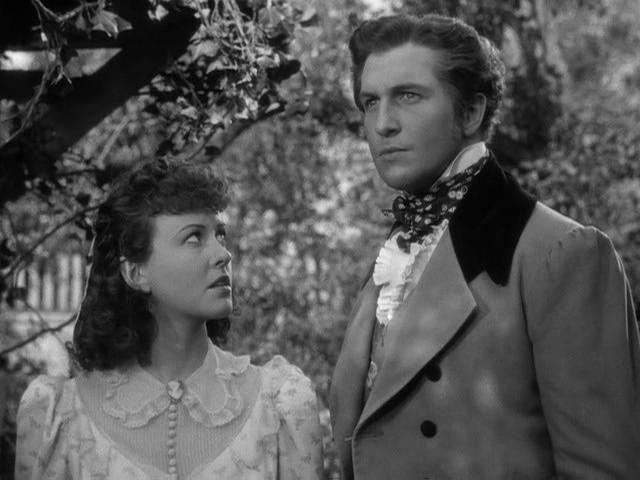
I really should not have been so surprised at The House of the Seven Gables. After all, it stars two of my favorite sinister gentlemen: Vincent Price and George Sanders. They play brothers (of course they do), one good, the other bad. In the surprise of the century, it’s Mr. Price who gets to be the good guy as Clifford Pyncheon, the eldest son of the Pyncheon family. He resides in the House of the Seven Gables with his father Gerald (Gilbert Emery) and his cousin Hepzibah (Margaret Lindsay). Things are not well at Seven Gables, though; Gerald and the younger son Jaffrey (Sanders) have managed to squander the family fortune and Clifford plans to sell Seven Gables and go to New York with his fiancee Hepzibah (this is the Victorian era: that’s totally cool).

Jaffrey’s not a nice man, though – he’s a greedy little rat who believes that there’s a secret treasure hidden somewhere in Seven Gables, and therefore does not want to give up the house. The battle rages between Jaffrey and Clifford, who wants to be out of the house and out from under the weight of his family history. Things go south for poor Clifford when his father suddenly dies during a verbal fight and his brother accuses him of murder.price-gables

The whole of the story is wrapped up in the Pyncheon family history. The first Colonel Pyncheon falsely accused a man of witchcraft in order to obtain his land. Later crimes are committed by the powerful patriarchs of the family – a fact which only Clifford wants to admit to. Clifford and Hepzibah try to escape from the cycle, only to be pulled back in by forces of greed and bitterness.

The actors  anchor The House of the Seven Gables. Price and Sanders are  stars we’re used to seeing in older incarnations, but here (at least at the beginning) they’re young and vibrant. Price especially carries his role off with great aplomb, first as the young joyful Clifford desperate to begin a better life, and then as the down-trodden older man released from prison after almost 20 years.  It’s a testament to Price’s acting ability that this will be the same man who creeps us out in The House on Haunted Hill. In The House of the Seven Gables, he’s never been more likable or attractive.

Sanders has less to do – he does not get to exercise his considerable smarmy charm, although his sardonic baritone is in full force here. He’s an interesting counterpoint to Price’s earnestness, even if the character he plays is largely one-dimensional.

Margaret Lindsay likewise deserves kudos for her role as the patient Hepzibah, who loves Clifford so deeply that she never stops trying to obtain his liberty. Lindsay goes from being a joyous young woman to an embittered matron, but she does not lose either her kindness or her passions. Lindsay gives her a gentility often missing in broader caricatures of the ‘old maid’ – she is a decent, loving person, choosing to live a life of solitude rather than give up on the man she loves. The reunion of Clifford and Hepzibah is perhaps one of the most moving and understated scenes I’ve ever experienced, a result of excellent performances on both the parts of Price and Lindsay. The entire film is worth it just for that one moment of beauty.

I’m surprised and happy that I can recommend this film as highly as I do. While by no means a perfect movie, it’s a remarkably effective one. A Victorian melodrama as only silver-screen Hollywood can make them, it nevertheless transcends the usual sentimental bluster through an excellent cast and a good script. It is moving because it seems so very human.

Something Wicked This Way Comes (1983)

something-wicked-this-way-comes

It’s that time of year again. The days grow shorter, the nights windier, there’s a howling in the North Country, the leaves turn and the Pumpkin Spice Lattes hit your local cafe. Halloween might be more than a month away, but it’s time to start getting the scares out.

Unintentionally, I began this scary season with my first-time reading of Ray Bradbury’s Something Wicked This Way Comes. While Bradbury may not have invented the ‘evil carnival’ subgenre, his tale of two boys fighting the cotton candy-flavored forces of darkness certainly does it the best. Bradbury’s genius lies not just in the story, but in the language he uses, creating a deep sense of foreboding, an electric energy and excitement for the danger and mayhem to start. He writes the way that Halloween feels.

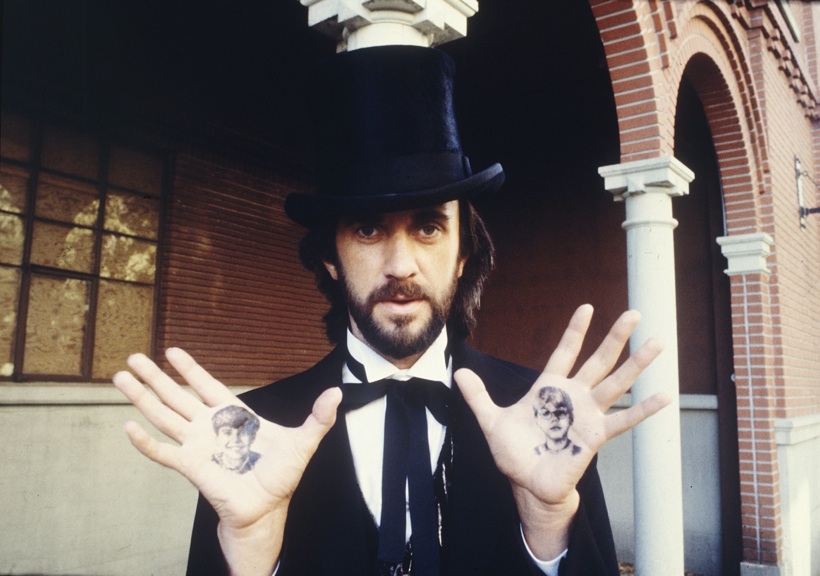
So having read the novel, I decided that it was a good idea to seek out the Disney film of the same name, starring Jonathan Pryce as the illustrated Ringmaster Mr. Dark, Jason Robards as Mr. Halloway and Vidal Peterson and Shawn Carson as the two boys, Will and Jim respectively.

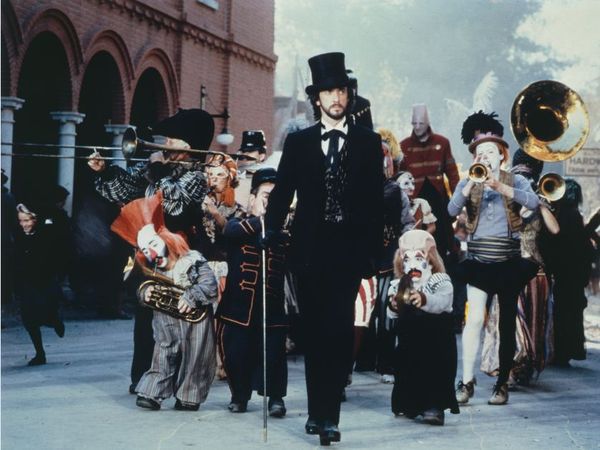
wicked4The film follows Will and Jim, two best friends on the brink of adolescence living in a small Midwestern town that remarkably resembles Vermont. The arrival of Mr. Dark’s Pandemonium Shadow Show in the small hours of the morning precipitates the arrival of Halloween by a week. The carnival offers hopes and dreams to unhappy residents of the little town, and in the process makes them a part of the freak show. Just what Mr. Dark is up to becomes clear, although his motives with regards to the two boys seem somewhat confused.

It’s difficult not to compare the film to the book, of course, but I’ll do my best. This is Disney, after all, and it offers up a fairly clear opposition between the evil of the carnival and the good of the two boys. It largely removes the darkness of Jim’s character, and cuts down the conflict and sympathy between the two friends. The people of the town who join the carnival all have distinct failings: a ladies’ man, a greedy man, a woman wishing for beauty, etc, which the carnival exploits. I was gratified, however, that they did not turn Mr. Dark into a Satan figure, but rather retained the book’s emphasis on the carnival’s love of misery and pain.

The film suffers from a few problems, the biggest of them lack of direction. While I can accept some of the changes to the novel’s structure, they are not replaced by any convincing motives. Mr. Dark appears to go after the boys because of what they see at the carnival, yet his methods largely call more attention to himself as a malevolent force. Mr. Halloway’s unhappiness is likewise a tad confused. The film dwells on his heart condition, but introduces his perceived failure as a father in a rather explicatory scene that doesn’t feel like it fits well with the rest of the narrative. Robards, looks uncomfortable in his part, delivering his lines in a somewhat stilted manner that does nothing to ingratiate him with the audience. Whether this is a fault in direction or in script I cannot tell, for Robards is typically a dynamic actor. But his performance, which should set up a counterpoint to Pryce’s Mr. Dark, lacks conviction. Something-Wicked-s

The highlight of Something Wicked This Way Comes has to be Jonathan Pryce, who imbues his Mr. Dark with all the energy and malevolence we might expect from a good Disney villain. His speech in the library as he searches for Jim and Will comes straight from Bradbury, with Pryce intoning every word with the glee of a carnival barker. He’s thoroughly enjoying himself. While the film tones down some of Mr. Dark’s corrupting influence, Pryce retains his seductive edge. He’s a demonic seducer, offering despair.

I’d love to recommend Something Wicked This Way Comes, and if I’d seen the film before reading the book I might be able to. It’s not the book; the story loses much of its power by establishing a good/evil binary and then wrapping it all up. Aside from Pryce, the performances are stilted – the two boys in particular could have used some acting lessons – and much of the terror falls off after the carnival’s arrival. Being a Disney film, perhaps the director was afraid to really bring the scares. The novel could do with a frightening adaptation that makes use of all the arsenal of horror filmmaking. Something Wicked is a book about Halloween coming early, and it’s more trick than treat.

The Avengers: Death of a Great Dane

Death of a Great Dane (Episode 2-08, November 1962).

death-of-a-great-dane-flirting

Death of a Great Dane bears the distinction of being the first Cathy Gale episode to be later remade with Emma Peel (as The 50,000 Pound Breakfast). The Gale episode is far more hard-boiled, while the candy-coloring of Season 5 takes some of the edge off later on.

It all begins when a man gets into a car crash and the doctors discover 50,000 pounds worth of diamond in his stomach. Steed and Cathy come in to investigate, leading them eventually to a joke shop, a reclusive and ill millionaire named Alexander Litoff and his staff, and the death of one of the millionaire’s Great Danes. There are some highly enjoyable set-pieces: Steed and Cathy at a wine-tasting together, flirting shamelessly (that scene will also be replayed in Dial A Deadly Number, again with Emma Peel); the final sequence between Steed and Litoff’s butler Gregory; a rare domestic sequence of Steed and Cathy listening to music. Steed suspects that there’s something fishy about the millionaire and his staff, and so attempts to sell them back their diamonds, only to get himself deeper into danger.

The villains in this case are, unfortunately, not terribly interesting. In the Emma Peel remake, Litoff’s staff include a simpering sadist and a tough-as-nails female right-hand. In Death of a Great Dane, the villains are overplayed, with the single exception of Litoff’s butler (Leslie French), whose repartee with Steed is among the best parts of the whole episode. There’s also John Laurie as Litoff’s doctor.

But as always, the point comes down to Steed and Cathy and how much fun they’re having together.  And they are having a lot of fun. The episode most clearly delineates the inherent differences between them, the source both of their attraction and their tension. Steed distrusts the millionaire because he suddenly begins giving to charity, while Cathy claims that Steed looks at the world far too cynically. This conflict between Steed’s cynicism and Cathy’s humanitarianism will come up again and again in later episodes, as she begins to hone his rough edges and help to reveal the much more caring man beneath; as he cultivates her intelligence and energy to fight against villains. Their mutual attraction is palpable in several well-played scenes, their flirtations beginning to take on more energy and intensity. Macnee and Blackman are in top form, visibly enjoying themselves from one scene to the next.

There’s an energy and vitality to this season of The Avengers that won’t be quite matched in Season 3, but will come back in force when Steed switches partners and meets Emma Peel. Here the edges are still visible, making the season rougher, meaner and sexier. Death of a Great Dane gives us that edge in force.

The Avengers: Warlock

Warlock (Episode 2-18, January 1963).

steed-cathy-warlock

Warlock is a curious episode. Technically, it was supposed to be the introduction of Cathy Gale, but due to reshuffling in airtimes it wound up coming in the middle of the second series. Steed and Cathy’s first introduction was re-edited to make it appear as though they already knew each other. Nevertheless, I prefer to think of it in light of its original intent.

Warlock hints at some of the weirder aspects of The Avengers that will become more prevalent, particularly in the Emma Peel series. Steed goes to pick up some papers from a scientist, only to discover that the man has slipped into a coma and the papers are nowhere to be found. But it’s a bizarre sort of illness, and Steed quickly learns that it’s linked to an interest in the occult and black magic. This leads him, naturally, to the British Museum, where he meets Cathy Gale and learns a thing or two about the ‘realities’ of the occult. The episode cannily glosses over the supernatural elements with a psychological explanation: if you believe in black magic, you can be affected by it. Cathy joins Steed, finding herself in a black magic circle run by a warlock (Peter Arne), who hires out his services to shadowy figures and has apparently been involved in possessing the scientist.

The plot is flimsy enough, with a bit too much coincidence to make it all worth while. The episode unfortunately fails to follow through on some of the possibilities of a cult, including human sacrifice, bizarre incantations and Cathy’s potential possession by the warlock. Like one or two later episodes, it’s difficult to give credence to the pseudo-psychological explanations, and equally difficult to accept the apparent supernatural power of our neighborhood warlock. The finale, in which Steed has to rescue Cathy from the dastardly clutches of this terrible black magic circle, should have been exciting, but falls flat as well.

Still, Warlock can qualify as a middling episode. Steed and Cathy discover their rapport: Steed is impressed by her audacity in investigating things for herself; Cathy seems attracted to his profession and personal insouciance. There is a lovely little scene where a drunk Steed attempts to entice her up to his apartment to ‘discuss the case.’ Had this aired as the first Cathy episode, Warlock would have provided a lovely little blueprint for their future sparring sessions, as their tension and mutual dislike/attraction leaps off the screen. As it is, the episode falls flat in many ways, but paves the way for later and better incarnations.

“When I find a hunt worth joining, Steed, I like to be in at the kill,” she tells him. And she will be, for the foreseeable future.

The Avengers: The Sell Out

The Sell Out (Episode 2-09, November 1962).

macnee-the-sell-out

Most people who know The Avengers at all, know the more famous Diana Rigg/Emma Peel seasons, with perhaps some basic awareness of Honor Blackman/Cathy Gale. But The Avengers started out as a more hard-boiled, harder-edged show, and did not really star Patrick Macnee as John Steed. The first season (now mostly lost) featured Ian Hendry as Dr. David Keel, a doctor whom Steed drags into his plots on a regular basis. Hendry left the show, and Macnee succeeded to the throne as the lead actor in the series. But Hendry’s imprint remained throughout the second season, and you can see the producers trying to establish the same sort of dynamic between Steed and another Doctor, in the shape of Martin King (Jon Rollason).

The Sell Out is one of three Martin King episodes, and has the distinction of being the best. This is hardly cause to celebrate, as the other two are so mind-numbingly boring that even my passionate attraction to Patrick Macnee cannot make up for it. The Sell Out has a markedly different tone to either the Cathy Gale or Venus Smith episodes of the second season, even down to Steed sporting a tan trenchcoat and reporting to vague, shadowy superiors. In fact, it’s one of the few episodes where we actually see that Steed is part of an organization with a hierarchy. He’s ostensibly a member of the Ministry of Defense and has two superiors in season two: One-Ten and One-Twelve, both otherwise nameless entities a la Le Carre or Ian Fleming. That tendency is discarded in later seasons, right up until the sixth with the disastrous introduction of ‘Mother’ as Steed’s superior. But it’s interesting to see them here, even as a testament to how the show was shaped and changed.

The Sell Out follows Steed as he tries to discover who has been sending out confidential information concerning the whereabouts of a French national that Steed has been assigned to protect. Several attempts are made on the man’s life, and Steed is having difficulty knowing who to trust. Enter Dr. King, whom Steed enlists for assistance in keeping the Frenchman safe until ‘certain negotiations’ about a Middle Eastern nation can be concluded.

There is no mystery here, I’m sorry to say. It becomes pretty clear who the traitor is within about five minutes. Jon Rollason as Dr. King is dull as dirt, though I’m not certain if that’s his fault or the fault of a poor script. And yet, having rewatched The Sell Out under some duress, I conclude that my initial appraisal of it might have been unfair. There’s a lot to be said for the episode, and most of goes back to style and *sigh* Patrick Macnee.

Macnee pretty well carries the episode, as he does with most of the ones not featuring Cathy Gale.  For anyone who likes Steed, that’s reason enough to sit through this one. His interactions with One-Twelve are entertaining, particularly as they give the lie to any assumption that Steed is representative of the status quo. He’s almost consistently insubordinate, preferring to do his work in his own time and according to his own judgement, rather than obey a shadowy dictator. Steed’s concern to both complete his assignment and discover the traitor lead him into some shadowy hallways, including a number of questions about his own position within the organization.

This is likewise one of the few episodes that boasts location shots in London, as well as perhaps the only time we see Steed driving a sports car. Steed is much more a hard-boiled agent in this series than in any other, his rough edges not yet smoothed out, and his chicanery and barely curbed violence almost shocking to anyone who only knows him as an elegant Edwardian gentleman. Yet Macnee makes him charming – far more so than I admit I ever liked James Bond – and does not sacrifice his inherent decency. Steed’s a bit of a cynical bastard, but he’s a likable cynical bastard. The entire episode feels like the first draft Le Carre short story, and I’m not certain you can argue against that.

So while The Sell Out is not for a viewer just starting out on The Avengers, it’s an enjoyable little episode for those of us who’ve seen them all.