Bloody October: Housebound (2014)

Housebound (2014)

housebound

I’m not sure what’s in the water over there around New Zealand and Australia, but they are producing some unique horror films right now. The Australian feature The Babadook was notable for its female-centric narrative punctuated by some truly terrifying sequences; now another film about haunted women comes from the neighboring country of New Zealand in the form of Housebound. 

Housebound focuses on Kylie (Morgana O’Reilly), a very inept felon captured while trying to rob an ATM. This is not her first offense, however, so the court sentences her to a fate worse than prison: house arrest at her mother (Rima Te Wiata) Miriam’s home. With a sensor fixed to her ankle so that she can’t leave the grounds without setting off an alarm, Kylie has to settle in to life with her mother and stepfather Graham (Ross Harper). At first Kylie is just sullen about the whole ordeal, but soon she learns that her mother persists in a long-standing belief that the house is haunted. When Kylie herself begins experiencing some rather paranormal phenomena, she enlists the help of Amos (Glen-Paul Waru), the security contractor who monitors her sensor and just so happens to be an amateur ghost hunter. As the pair begin to discover some sinister secrets about the house, Kylie becomes more convinced that it’s not all in her mind.

Housebound is that perfect blend of horror and comedy that makes films like Scream or Gremlins so enjoyable. The first half of the film is a legitimate haunted house story, complete with weird noises, looming figures, flashing lights, and strange events. The second half focuses more on Amos and Kylie’s attempts to discover the reason behind the haunting, leading them further afield – and Kylie into greater danger. But the whole film is underscored with wry humor: Kylie is a sarcastic, sullen young woman, her mother bright and bubbly and largely at peace with the fact that her house is plagued by a ghost. Most importantly, however, the plot all hangs together, right from the very beginning. The denouement is always a challenge for haunting films; there’s only so many way to resolve the story. Housebound actually gives a satisfying, believable conclusion to a very weird tale, bending genre tropes without ever breaking its own rules. The fact that this is all done by a first-time director and a relatively unknown cast just makes that much more surprising and exciting.

As an inveterate lover of haunted house movies, I can recommend Housebound with gusto. My one complaint is that there’s at least one twist that I did manage to predict, but that did nothing to damage my enjoyment of the film. It’s an entertaining ride from start to finish, rarely missing a beat, and bringing some proper scares along with it.
Bloody October: Corridors of Blood (1958)

Corridors of Blood (1958)

corridors-of-blood

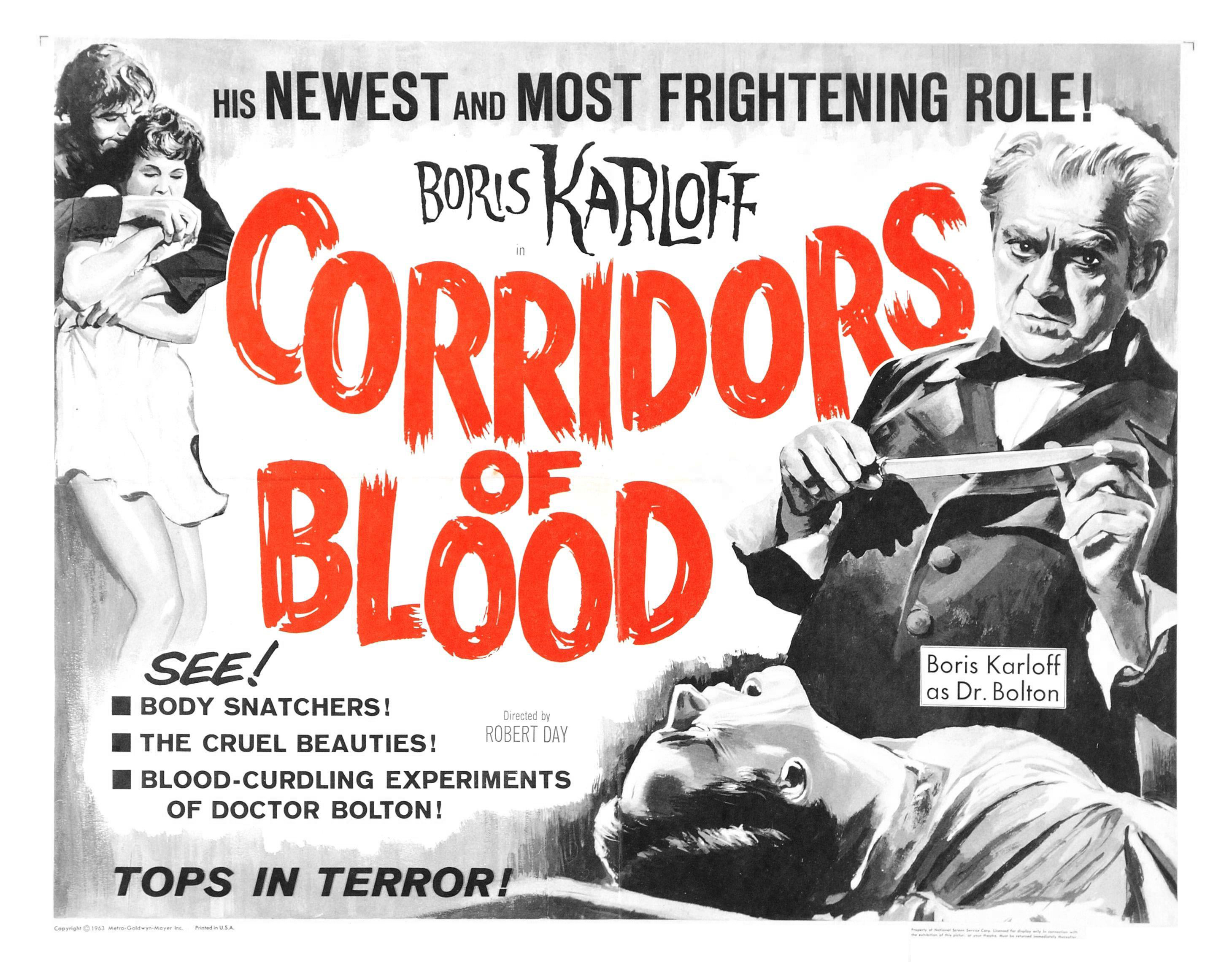
There’s a bit of a misnomer in the title of this film: while there are many corridors, there’s very little blood featured in what amounts to an effective thriller from 1958.

Corridors of Blood stars Boris Karloff in rare non-monstrous mode as Dr. Thomas Bolton, an expert surgeon in the Victorian period searching for the key to painless surgery. Bolton’s humanitarian efforts to discover anesthesia have him experimenting on himself with a mixture of gases until he finally finds the mixture that works. Unfortunately, the mixture also causes blackouts that have Bolton wandering London, getting into mischief and eventually being exploited by underworld criminal Black Ben (Francis de Wolff) and his associate Resurrection Joe (Christopher Lee) to sign false death certificates for murder victims.

Corridors of Blood is a surprisingly slow-moving film for its run time (it comes in at less than an hour and a half), taking awhile to build the character of Bolton and the world of barbarous surgery that he’s trying to reform. The most intense scenes are also the earliest, as Bolton performs amputations without the benefit of anesthesia. That in itself is horrific enough and Bolton’s colleagues seem to be immune to the suffering of their patients, relying on the refrain that you cannot separate pain and the knife. Bolton disagrees, but as he gradually becomes addicted to the anesthetic gases with which he experiments his own surgical skill suffers.

While far from a horror film, Corridors of Blood is actually quite effective at creating a sympathetic protagonist whose gradual downfall is entirely due to his humanism (in contrast to your usual mad scientist). Christopher Lee puts in a strong but underused performance as the sepulchral Resurrection Joe, a character who looms out of dark corridors dressed in a funeral coat and top hat. The other characters are fairly stock, from the earnest young doctor who wants to make a difference to the sweet Victorian maiden (Bolton’s niece) confused by what’s going with her uncle. Still, though you can predict the ending of this film, that doesn’t make it any less poignant.

Le Corbeau (1943)

Le Corbeau (1943)

Le_corbeau_release_poster

Best known for the thrillers Les Diaboliques (The Devils) and La Salaire de la Peur (The Wages of Fear), director Henri-Georges Clouzot is best described as the French Hitchcock. In fact, a certain key scene in Les Diaboliques was so frightening that it reportedly prompted Hitchcock to up the ante in that Psycho’s famous shower scene. Clouzot certainly never went by halves in his films, ramping up tension and paranoia until characters either broke or the audience did, as proven by the disturbing Le Corbeau (The Raven).

Le Corbeau opens on small French town Saint-Robin, where anonymous poison-pen letters signed only Le Corbeau have been plaguing the inhabitants. The main target seems to be the town’s doctor Remy Germain (Pierre Fresnay), accused of  a multitude of sins including having an affair with his colleague’s wife Laura (Micheline Francey) and providing illegal abortions for women in trouble. But soon other members of the community begin receiving letters informing them of infidelity, usury, and even illness. The catch is that the cruelly worded accusations seem to be true. As the letters pile up, the people begin to turn against each other, revealing the petty cruelties, prejudices, and paranoia underlying the idyllic little town.

Le Corbeau is not a pleasant film; it’s a film about unpleasantness, about meanness and cruelty and, more than that, about the willingness to believe the worst of your neighbors. While The Raven is a vilified figure, the gossip he or she spreads is believed without question, causing the destruction of homes, careers, and lives. The townspeople are divided in their suspicions of each other – not only could anyone be the Raven, anyone could also be targeted by the Raven, prompting a bizarre playing off of people against each other as they learn the worst about their neighbors. As the film proceeds to its inevitable climax, the viewer is treated to seeing characters at their vindictive worst.

Le Corbeau created something of a stir in France, both during and after its premiere. The film appeared in 1943 and was produced by Continental Films, a German production company set up in France just prior to Occupation. While the Germans viewed Le Corbeau as anti-Nazi, the French would later accuse Clouzot of vilifying the French people. This background throws the argument of Le Corbeau into interesting relief: the film does indeed represent the villagers as petty and malicious people, more concerned for propriety and disguising their own amorality than in punishing the guilty and exalting the innocent. Germain, one of the few decent people in Saint-Robin, is repeatedly attacked both by the Raven and the townspeople until forced into revealing his entire past; innocent people die or are injured because they’re suspected of being the letter writer. The film paints a very dark picture of France in the 1940s. It’s made even darker if read as a veiled allegory for the Nazi occupation, the turning of the French people against each other as neighbors become informers.

If Le Corbeau has any flaw it is in the denouement, when the discovery of the letter writer plays as secondary to Germain’s crisis of faith and eventual rejection of the town as a whole. The ending feels strangely rushed, as though Clouzot had run out of ideas and was simply trying to give the narrative some kind of closure. But the point of the film is not about closure – it’s about suspicion, about paranoia. The Raven is vindictive, but so is the entire town. As the film ends with the image of a figure in widow weeds walking down the empty street, one feels as though nothing has actually been resolved. Whatever Clouzot actually intended in his film – and whether he intended any parallels to be drawn at all – it is a deeply critical film at a time when France was in no mood to be criticized.

Bloody October: Salem’s Lot (1979)

Salem’s Lot (1979)

salems-lot-1979

It’s my favorite time of year! With autumn finally arriving in all its pumpkin-spice flavored glory, it’s time to settle down with some good, old-fashioned scares. First up is Salem’s Lot, the 1979 TV adaptation of Stephen King’s vampire novel starring every late-70s character actor ever, and James Mason.

Last year I made it exactly halfway through King’s novel before hitting what I usually call King’s “sadism wall.” Every single Stephen King novel I’ve ever read arrives at a point where King begins to take bizarre enjoyment out of torturing his characters. While I’m all for a bit of nasty horror, it’s something different when an author actually enjoys making his readers nauseous. So I abandoned Salem’s Lot as I had abandoned Pet Semetary and Misery before it – which is a shame, as I was really enjoying the scary vampires.

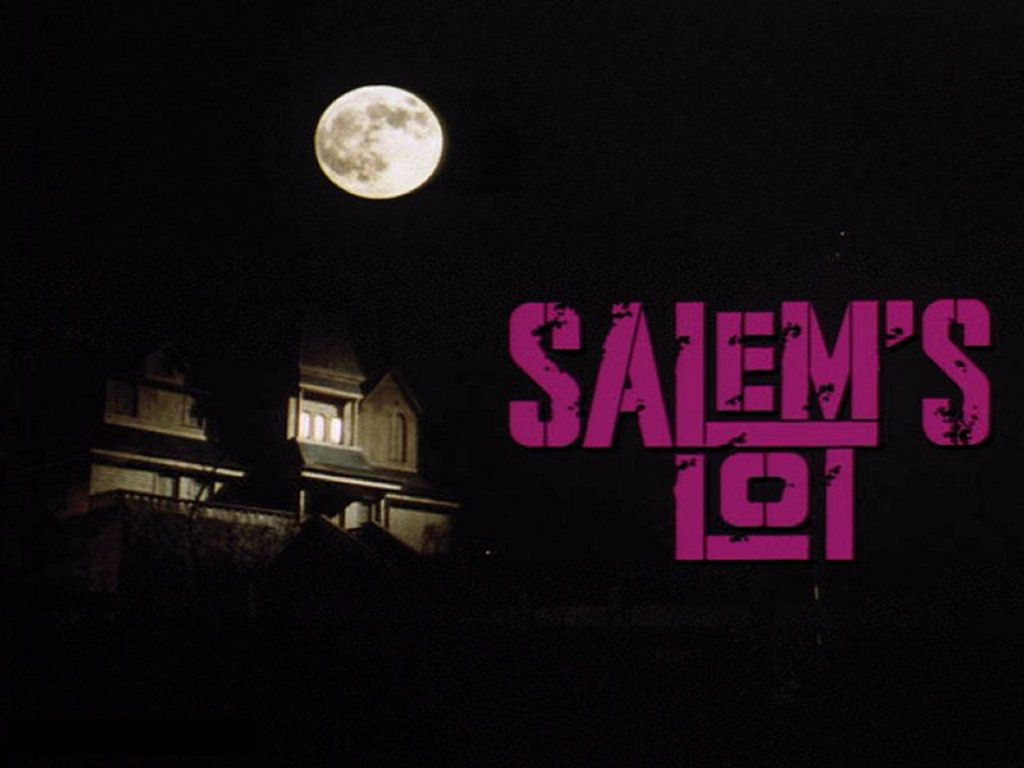
The 1979 Salem’s Lot could have done with a bit more of that sadism, though, because it’s one of the most aggressively un-scary movies I’ve ever seen. The tale centers on Ben Mears (David Soul), a writer who returns to his hometown of Salem’s Lot to work on a book about the creepy, potentially evil Marston House. He encounters the slightly weird small town inhabitants and strikes up a relationship with Susan (Bonnie Bedelia), the local schoolteacher. But something is wrong in Salem’s Lot and it all has to do with Mr. Straker (James Mason), an elderly gent who has moved into the Marston House with his business partner Mr. Barlow – a mysterious man who seems to go on a lot of business trips to Europe. After a little boy goes missing in the woods, deaths begin to pile up, leading Mears to suspect that there’s something vampiric going on at that evil old house.

Salem’s Lot cleaves very close to King’s book, with some important differences; what it doesn’t manage to adapt is the scares. Director Tobe Hooper spends much time setting up the small town life, but tension dissipates with every slightly weird or sudden cut from one scene to the next. Plot threads are introduced to be summarily discarded; other threads are picked up without the least bit of narrative consistency. What happened when the sheriff got ahold of Straker’s black coat? Where did the priest come from, and what happened to him? Can vampires be destroyed by fire? What actually did happen at the Marston House? What the hell is going on?! For a three-hour TV miniseries, there are too many unanswered questions and too many extended scenes in which nothing happens. The entire cast speaks in monotone – all except James Mason, the sole bright light in the murky mirage. Mason is having a great time snacking on the scenery and tossing veiled vampiric threats at everyone in sight. Thank God too, because otherwise I would never have sat through the damn film.

One thing I will say for Salem’s Lot: the vampires are proper vampires. There’s no sparkling, no gentleman counts, no erudite discussions about how we misunderstand the poor baby bloodsuckers. These are evil motherfuckers who want to drink blood and destroy civilization from the inside out. I miss those kinds of vampires.

Elmer Gantry (1960)

Elmer Gantry (1960)

elmer-gantry-poster

Big-tent evangelism is a very American form of religion, a combination of populist Christianity and salesmanship that could only exist in a sprawling country that relied on religious freedom as one of its founding tenets, right next door to aggressive individualism and free enterprise. Elmer Gantry, therefore, is a story that can only happen in American, with a hero as complex and morally ambiguous as the land itself.

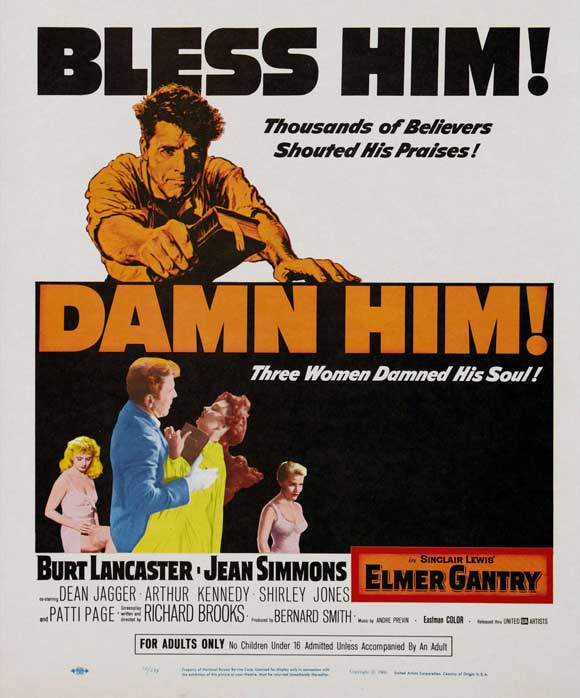
Burt Lancaster is Elmer Gantry, a traveling salesman, huckster, and former seminarian who hitches his wagon to Sister Sarah Falconer (Jean Simmons), the leader of a traveling revivalist church. I use the term church loosely, for Sister Sarah has no denominational affiliation to speak of: she’s selling her own brand of Christianity to the rural masses. Gantry proves to be a sort of godsend to Sister Sarah’s organization: he’s a rousing speaker, summoning visions of hellfire and damnation to ignite the congregation while Sister Sarah offers them peace and salvation. As their organization grows, Gantry and Sarah decide to push into the (bigger) city with their revivalist meeting, heading to Zenith, Winnemac (a fictional city and state that could be any large populated area across the Midwest), where Sister Sarah hopes to build a permanent tabernacle. Gantry runs afoul of his past, however, in the form of Lulu Baines (Shirley Jones), Gantry’s former lover turned prostitute.

elmer-gantry2

Elmer Gantry could have played like a straight moral tale, with the shady salesman duping the small-town folks into buying his religious snake-oil until finally exposed by a more moral crusader (or, alternatively, by his nefarious past). But the film refuses to offer such an easy answer to the questions it poses. Gantry is a huckster, no doubt, yet he comes to believe or, at least, to understand the need for belief in those around him. Sister Sarah is no doe-eyed idealist dreaming of salvation; she’s a complex figure, with both a strong understanding of what it means to sell religion, and a true belief that she’s saving souls. Jim Lefferts (Arthur Kennedy), a newspaperman and resident symbol of atheism and cynicism, is repelled by Gantry but respects his intellect all the same; nor is Lefferts’ disbelief any better or more realistic than the evangelical fervor of Gantry and Sarah – it’s just another side of the same coin. Even the wronged and cynical Lulu hides a complicated soul: rejected by her reverend father after she’s seduced by Gantry, she still loves the man who wronged her.

If this film could have had a better cast, I’d like to see it. Burt Lancaster is the center of this whirlwind: charming, cunning, half-sincere and half-joking, he charges into each scene with his head down and his teeth gleaming. A salesman for Jesus, he waves his Bible with all the conviction of a true believer, and talks town officials into allowing the revivalist meeting by appealing once to their avarice and twice to their faith. Yet Gantry isn’t insincere in his religion, or in his burgeoning love for Sister Sarah; he just bends the world to accommodate him, mostly unaware of those he walks over to get there, and never willfully harming anyone. He might seem almost Satanic at times, but we should not forget that Satan has always believed in God.

elmer_gantry_jean_simmons

Jean Simmons as Sister Sarah is in stark contrast to Lancaster’s bellowing Bible-thumper. Sarah is the other kind of true believer, a woman whose faith is so engrained in her identity that to think that God isn’t speaking to her would be to destroy her own soul. She recognizes Gantry as a charlatan, making use of his charlatanism to advance her ministry. When Gantry’s roving past is revealed, it’s Sister Sarah who suffers willingly, as she finally steps into the role of martyr. But again it would be a mistake to dismiss Sarah as someone searching for personal aggrandizement: this is a film about faith, and Sarah’s is as real and as palpable as Gantry’s.

Elmer Gantry‘s great strength is that it neither dismisses evangelism as cynical chicanery, nor does it embrace the Bible-thumpers as the true heralds of God. It’s not about the rightness or wrongness of religion or atheism, or about where religious truth actually lies. If anything, it’s about America: about the soul of a country and of a people, about searching for answers to questions that have none. Is Gantry a huckster or a preacher? Does Sister Sarah perform a miracle or is it just random coincidence? How far does faith go and can we justify the ways of God to Man?

Billy Jack (1971)

Billy Jack (1971)

billyjackinternational

The 1970s produced some rather unique films. The rise of independent filmmaking, coupled with the aggressive shifts in the culture that pitted youth against age, black against racist white, the minority against the majority in all its shapes and sizes, developed a cinematic culture vibrant, violent, and increasingly bizarre. The relative mainstream success of blaxsploitation films like Shaft and Sweet Sweetback’s Badassss Song brought minority perspectives into cinemas – and while those films were occasionally poor or amateurish, they were never boring.

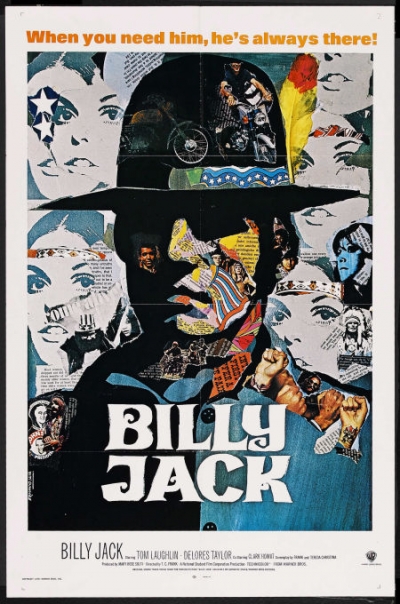
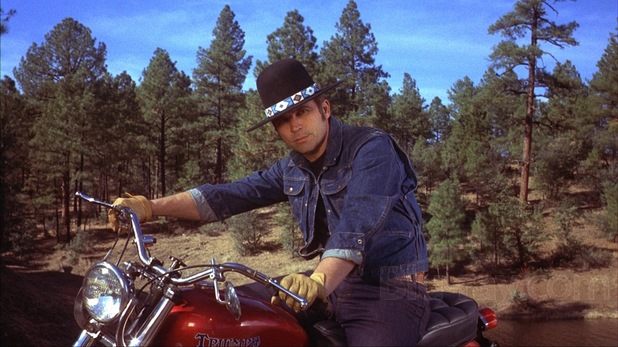
Billy Jack represents an entry into the small but rather fascinating genre that is basically (for lack of a better term) “redsploitation”: an American Indian version of the counterculture films that came out of the Black and Chicano power movements. The story centers around Billy Jack (Tom Laughlin), a part white and part Navajo hero who, armed with badass Green Beret tactics and deadpan jokes, defends his reservation from racist townspeople. He’s further allied with the counterculture via his girlfriend Jean (Delores Taylor), who runs the “Freedom School” on the reservation, a school dedicated to giving a home to wayward young people otherwise living on the fringes of society. Billy’s main enemies come in the form of Bernard (David Roya), the nasty son of a local boss (Bert Freed), and his gang, who get their jollies by abusing anyone who comes in their paths, especially the students from the Freedom School. As violent acts pile up, Billy must prepare to fight the onslaught of town councils and the National Guard, all in the name of defending the defenseless.

billy-jack-2

Billy Jack is a free-floating film with only the nebulous beginnings of a central plot. Large swathes of the film are dedicated to the “psycho-drama” performances of Freedom School students, as they stage arguments with the local council over curfews, or prove the inherent hypocrisy of the system through street theater. The villains are dyed-in-the-wool racists, xenophobes, and sadists, with little to make them even close to sympathetic. Interestingly, the local sheriff is more on the side of Billy Jack and the students than he is with the white majority, as he tries to keep the peace and stop the escalating violence. There are recognizable scenes of sit-ins, including a lunch counter sequence in which the American Indian students are bullied by Bernard and his gang. Enter Billy Jack, who takes off his shoes and kicks everyone’s ass. The film later takes some decidedly dark turns, including featuring a sexual assault. The central theme also develops into a conflict of Billy Jack’s use of violence to stop the baddies, while Jean hangs onto her pacifism as the only way forward.

Billy Jack opened several years before the American Indian Movement’s stand at Wounded Knee, and in that sense the film is prescient in its final sequence. It’s a smorgasbord of the early 70s, incorporating counterculture ideology, nonviolence, and civil rights conflicts into a reversal of the typical western narrative. Here the Indians are the violated minority, while the townspeople endlessly encroach on their land and their freedom in fear of anything that is different. But the film provides no clear or easy answers to any of the questions it poses. Like sister films such as Sweet Sweetback, Medium Cool, and Easy Rider, the best that we can hope for is for the struggle to carry on.

Night and the City (1950)

Night and the City (1950)

NIGHT-AND-THE-CITY.preview

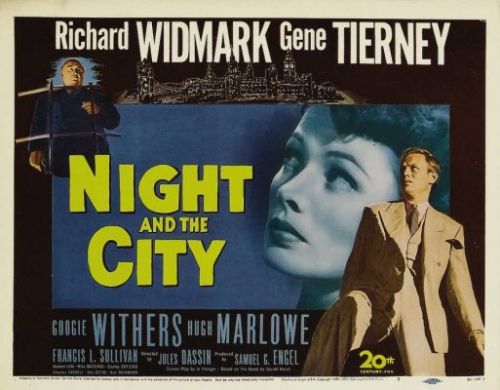
Jules Dassin’s Night and the City is often noted as a seminal noir, an early example of the British version of a classically American genre that pits bad guys against worse guys. It’s an extraordinarily pessimistic film, its central character just as unlikable as the villains who surround him.

Richard Widmark is Harry Fabian, a small-time hustler who works at the Silver Fox Club, where his girlfriend Mary (Gene Tierney) is a singer. Fabian’s main purpose is to find a way to live a “life of plenty,” which to him means slowly conning his way up the criminal social ladder. To this end, he decides to become a wrestling promoter, taking business away from the local magnate Kristo (Herbert Lom) by enlisting the latter’s father to train wrestlers. Subterfuge piles on subterfuge: Harry obtains his start-up money from his boss’s wife Helen (Googie Whithers) by promising to help her get a license to start her own nightclub and leave her husband Phil (Francis L. Sullivan, doing his Sidney Greenstreet impression). But all of Harry’s machinations threaten to destroy him, as he sweet-talks one dangerous criminal after another and places himself, and everyone connected to him, in harm’s way.

Night and the City‘s complex plot belies its fairly short running time, with a lot of plot development packed into a very small space. It’s a blink-and-you’ll-miss-it film: one minute Harry is on top of the world, the next in the gutter trying to talk his way out again. It’s hard to root for anyone here except perhaps Mary, who suffers mightily at the hands of a man who refuses to see that he’s always going to a failure. Just as Harry is supremely unlikable, the other villains have levels of pathos: Kristos is tortured by his father’s abandonment, Phil passionately in love with a wife who hates him, Helen desperate to escape from a loveless marriage. The film’s climax is inevitable without being predictable: Harry is doomed and everyone but him knows it from the start. There is no hope underlying Night and the City’s pessimism: the criminals have almost no fear of the law, but each of them is trapped in their personal hells of ambition.

widmark460

One of the most striking and brutal scenes occurs between Kristos’s father Gregorious (Stanislaus Zbyszko) and the Strangler (Mike Mazurki). The two competing wrestlers tussle together for an extended sequence that is fascinating and painful to watch: this is real wrestling, not the staged matches that Kristos specializes in. The camera documents their fight with an unflinching gaze, bringing us so close that you can almost smell the blood and sweat. If this film has an argument, it’s present in this one climactic moment. Forgotten are Harry’s fancy word games and Kristos’s gangland posturing; the melodrama that has been played out for most of the film falls back in the face of a brutal match between two men who are treated as animals. As with the rest of the film, there’s no one to root for: it’s violence without purpose, compelling and meaningless.

Night and the City’s reputation has certainly been earned: it’s an influential film with a strong cast and striking images that will be played out, in different forms, across cinematic history. It’s not one to end an evening on, though: few films are as hopeless as a European film noir, and in this one it’s hard to even cry for the loss of innocence. This is a film where innocence does not even exist.

Beware, My Lovely (1952)

Beware, My Lovely (1952)

beware-my-lovely-poster

Beware, My Lovely falls into that particular sub-genre of thrillers classified as “house invasion” films: a criminal or gang of criminals manage to break into a family’s home and take it over, transforming the safe suburban landscape into a land of dark shadows and looming threats. The sub-genre was particularly prevalent in post-World War II America as an off-shoot of Cold War paranoia and the increasing sense that the enemy could be the person next door. In Beware, My Lovely, the sub-genre also deals with the incipient sense of inferiority of post-war masculinity.

Beware, My Lovely is set in 1918 and features Ida Lupino as Helen Gordon, a widowed housewife preparing her home for Christmas by a spate of extensive cleaning. Her lodger is leaving for several weeks, and her young niece Ruth is of little assistance, so Helen calls in an itinerant handyman Howard Wilton (Robert Ryan) to help her with the heavy work. As Helen finds herself alone with Howard, it develops that the otherwise friendly worker has a serious psychosis. After a violent outburst, Howard confesses to Helen that he has occasional blackouts where he does things – including murder – that he later cannot remember. Although Helen tries to express sympathy for the damaged man, she soon discovers that Howard has locked them in the house and hidden the keys, prompting a battle of wills as Helen tries to convince the damaged Howard to let her go.

Beware, My Lovely is a chamber-piece of a film noir anchored primarily by Lupino and Ryan, with only a few supporting characters coming in and out. It moves quickly, developing Howard’s psychosis and subsequent possession of the house as something nearly outside of his control. Ryan plays his part with remarkable pathos: Howard isn’t a bad or evil person per se; he’s after nothing more than help and some cure for his loneliness, but is incapable of controlling his blackouts or his behavior within them. Refused entry into the army, Howard’s madness seems to be instigated by a sense that he’s “less of a man,” his violence directed at women that he believes are laughing at him. It’s Helen’s niece who prompts his outburst when she tells him that the housework he’s doing is “woman’s work.” beware-my-lovely

Lupino has a more thankless role. While Helen begins the film with a strong emotional character, her behavior sometimes borders on nonsensical. She never seems to get past her terror and so remains a victim throughout the film – a companion to similar female characters in home invasion films who never manage to get their hands on a coffee pot, a lamp, or a kitchen knife long enough to do something. While the audience shares her terror, her ineptitude becomes increasingly exasperating. This isn’t a slur on Lupino, however, who has one of the strongest screen personas you can ask for in a Classical Hollywood actress. But Lupino’s very strength of character makes Helen’s behavior seem unbelievable; Ida Lupino would never faint the way this woman does.

Despite Helen’s hysteria, there’s much to like in Beware, My Lovely. It maintains a claustrophobic atmosphere that does not let up until the final frame. Most of the film takes place within Helen’s house, juxtaposed occasionally against the world outside that goes along as it always had, developing into a seeming mockery of Helen’s situation. It’s the scenes of near-escape that have the most energy, as do the moments where Helen tries to convince Howard that she’ll help him if he’ll only unlock the front door.

Beware, My Lovely has the hallmarks of a classic, even if it falls somewhat short in the execution. Ryan and Lupino are attractive screen presences, and Ryan in particular uses his looming physicality and sorrowful eyes to excellent effect. If it never quite achieves the level it might, Beware, My Lovely is a diverting piece of thriller cinema.

The Bat (1959)

The Bat (1959)

the-bat-1959

B-grade mystery movies of the 1950s had a cache all their own. Very often the ghostly or apparently supernatural killer was in it for the money and nothing else, which for me usually takes some of the suspense out of the investigation. I was pleasantly surprised by The Bat, however, which has all the earmarks of a generic thriller and manages to be a bit different. The Bat is a surprisingly clever, funny little film, stocked with some excellent character actors led by Agnes Moorehead and Vincent Price.

The Bat opens with mystery writer Cornelia Van Gorder (Moorehead) leasing an old mansion while the owner is away on an extended hunting trip. The mansion and the small town have a sinister history, though: they were the site of several murders the year before by a character known only as The Bat, a serial killer who preys on women by ripping their throats out with steel claws. Cornelia is thrilled at first, but things start getting ugly when The Bat apparently breaks into her house and releases a rabid bat into her bedroom. These events are wound up in the disappearance of a million dollars in securities from the vault of the local bank. The culprit is the bank’s owner and proprietor of the very mansion where Cornelia and her maid now live; but the bank owner was murdered by his friend Dr. Malcolm Wells (Vincent Price) before revealing the location of the securities (I’d say this was a spoiler, but it happens within the first ten minutes of the film’s run time).

the-bat-04

There are actually more than a few twists and turns running through a film that appears quite simple on the face of it. The mansion is treated as an “old dark house,” but some of the suspense is punctured by Cornelia and her maid’s no-nonsense attitude to tales of ghosts and killers. AgnesMoorehead is at the top of her game here, playing Cornelia as an acerbic Agatha Christie who delights in the mayhem going on around her, and is more than capable of taking on several Bats at once.The film makes excellent use of its female characters, each of whom proves to be much tougher than the men that surround them. Female friendship is powerful and long-lasting, while male friendship proves remarkably false. It’s really up to the women to solve the mystery, save the town, and find the loot; the men are too busy killing each other off.

Moorehead has a brilliant counterpart in Vincent Price; their scenes together pop as each tries to out-creep the other. Price’s sinister persona is pitch perfect as always, giving the simplest lines dark and terrible meaning that he obviously delights in. If there’s a flaw in him, it’s that he’s so obviously sinister from the beginning, as the audience is privy to the original murder of the bank owner.

The Bat isn’t a brilliant thriller by any means; one wonders what a Hitchcock or a Lang might have made out of the same cast and script. But it is a diverting little film, enjoyable from beginning to end. Don’t assume that you know the solution as you go into it – it has quite a number of hidden corridors.

Carnival Of Souls (1962)

Carnival of Souls (1962)

carnival-of-souls

American filmmaking went through a period of spectacular growth and increased genre diversity throughout the 1950s and 60s. The Hollywood studio system was slowly collapsing, allowing more space for young directors, writers, and actors to step in and start experimenting. While the low-budget horror film Carnival of Souls didn’t achieve cult status until many years after its release, it has all the hallmarks of early American realism, filtered through a horror story that asks more questions than it tries to answer.

Carnival of Souls tells the story of Mary Henry (Candace Hilligoss), a young woman plagued by hallucinations following a near death experience when her car plunges off a bridge during a drag-race. The other occupants of the vehicle are killed, but Mary emerges from the river three hours later with no memory of what happened or how she escaped. A week afterwards, she takes a job as an organist at a church in a small Utah town, hoping to escape from the trauma of her car wreck. But when she arrives in the town, she begins to hallucinate that a bizarre man is stalking her. This all seems tied to an abandoned carnival on the outskirts of the town, though how or to what purpose remains unclear.

carnival-of-souls-the-man

Carnival of Souls relies mostly on the tense, off-kilter atmosphere of the town and its inhabitants, focalized through Mary and her increasing paranoia. The camera work itself feels carnivalesque, managing to instill close-ups and otherwise normal scenes with a sense of foreboding. No one is really normal in this film: Mary’s fellow lodger John Linden is nearly a sexual predator, insinuating himself into Mary’s room and life with self-centered ease; her landlady, the minister for whom she works, and even the kindly doctor who attempts to assist her all seem in collusion with supernatural forces. The film as a whole has a silent-movie aesthetic, especially in the appearance of the devilish ghouls who menace Mary. This element is further punctuated by an eerie organ score that veers between religious and carnival themes. The two overlap as Mary’s hallucinations become more pronounced, and then cut out altogether in key sequences, as though transition from one plane of existence to the next has been imperfectly completed.

Hilligoss’s distanced performance is central to the film’s conceit: Mary is unable to connect to anyone, desperate for human contact one minute and then cold and distant the next. While the other actors vary between amateur theatrics and solid performance, Hilligoss remains both sympathetic and remote; the audience shares her terror, but cannot fully invest in her as a person. Most of the film is told through her eyes, yet there’s a sense of distance even in the most frightening sequences. Like Mary, we are disconnected from this world, and we also feel the terror that goes with that disconnection. It’s an excellent trick that combines cinematography, soundtrack, and the actress’s performance, and lends Carnival of Souls its most basic horror.

Carnival of Souls was made on a budget of $3,000 and has influenced filmmakers like George Romero and David Lynch. Director Herk Harvey never made another feature film, though he was a prolific director of educational and industrial films. It’s a shame Carnival of Souls didn’t do any better at the box office, for it might have encourage Harvey to continue to hone his undoubted abilities in combining the mundane and the supernatural. As it is, the film stands as a cult classic and a deeply influential work that helped shape the future of horror.